Closing Time: The AI borrowing binge is back
CNBC reports that Meta is selling $20 billion to $25 billion of bonds to pay for its AI buildout, days after S&P lowered the outlook on its credit rating to negative over heavy spending.
Good afternoon. The biggest names in tech went back to Wall Street for money today, and the bond market was open for business. Here is what mattered.
Meta is selling $20 billion to $25 billion of bonds to pay for its AI buildout, days after S&P lowered the outlook on its credit rating to negative over heavy spending, CNBC reports.
Big Tech is flooding back into the bond market after a quiet stretch of nearly three months, with Oracle selling $10 billion of bonds and almost $10 billion of stock on Monday, according to Bloomberg Law.
Palantir beat Wall Street’s forecasts and raised its outlook, but its shares fell as much as 7% as investors focused on a sharp slowdown in new commercial deals, Business Insider reports.
On Election Day, a test of six AI chatbots found they often got local ballots wrong, from inventing races to naming the wrong congressional district, The Washington Post reports.
Anthropic warned in its amended IPO filing that it may soon reach its own threshold for AI that dramatically speeds up its own development, according to TechCrunch.
The Wire
The latest headlines from our live AI news feed.
OpenAI hires Uber president Jill Hazelbaker as chief corporate affairs officer — The Information
Google will turn off Search for schools that reject AI — The New York Times
OpenAI and Anthropic stand up 'war rooms' to fight election misinformation ahead of midterms — The New York Times
Google DeepMind staff push to be released from lifetime non-disparagement clauses — The Washington Post
Old, polluting jet engines are being scavenged to power AI data centers, NYT finds — The New York Times
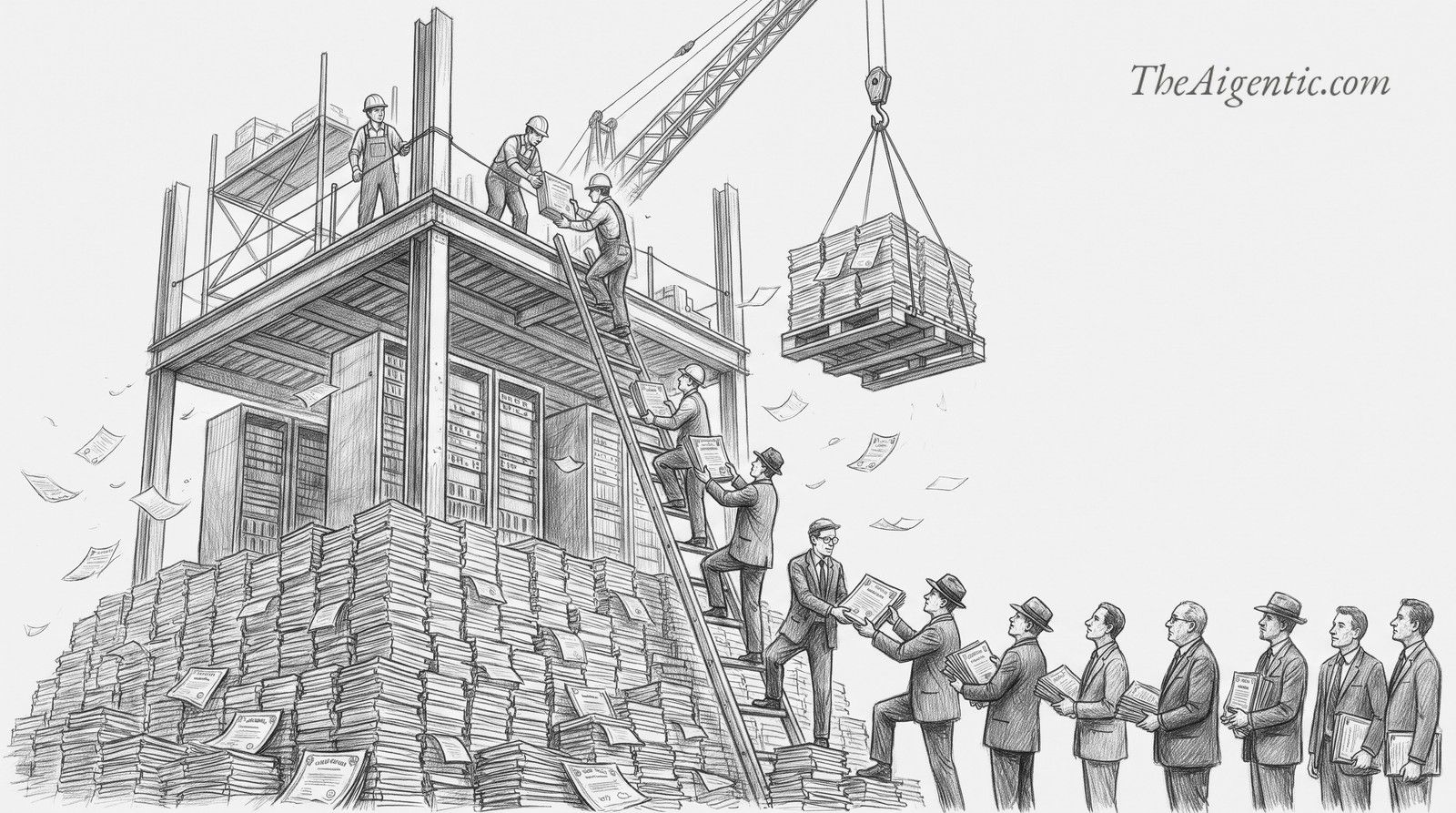
The AI borrowing binge is back
For most of the late summer and early fall, the biggest tech companies stayed out of the U.S. bond market after a borrowing spree earlier in the year made investors nervous. That pause is over. Microsoft sold $25 billion of bonds last Thursday, Oracle raised about $20 billion in stock and debt on Monday, and Meta came to market on Tuesday, Bloomberg Law reports.
Meta’s deal is the largest of the three. The company is aiming to raise between $20 billion and $25 billion, with about two thirds in U.S. dollars and one third in euros, and final pricing was expected Tuesday afternoon, according to CNBC. It follows a $25 billion bond sale in April and a plan announced last week to raise $95 billion more, including $35 billion of new stock.
The reason is simple. Meta expects to spend between $135 billion and $145 billion on capital projects this year, mostly on data centers and the chips inside them, and it reported negative free cash flow of $2.12 billion last quarter. Alphabet and Amazon also reported negative free cash flow, which means the cash coming in from their businesses no longer covers what they are spending on AI.
That has started to worry the people who grade their debt. S&P Global Ratings kept Meta at AA- on Friday but changed its outlook to negative, citing uncertainty about the spending and the cash it is burning. Oracle, which has about $125 billion of debt, was cut to BBB- in July, one step above junk, and the cost of insuring its bonds against default has jumped, CNBC reported Monday.
Investors did not run from the AI trade today, though. Meta shares rose 2.4%, Oracle gained 5.9% and Microsoft added 2.7% as chip and AI stocks bounced after several days of heavy selling.
The bigger picture is that the AI buildout has grown too large to pay for out of pocket, even for the richest companies in the world. Bond buyers are still willing to lend, and that keeps the data centers going up. The open question is how long that patience lasts if the spending keeps rising faster than the profits it is supposed to produce.
Elsewhere in AI today
Palantir’s business is booming, but investors wanted more. Revenue nearly doubled to $2.31 billion in the third quarter, and U.S. commercial sales of $984 million topped government sales for the first time. Shares still fell as much as 7% on Tuesday because new commercial bookings grew just 11% from a year earlier, after jumping 153% in the prior quarter, Business Insider reports.
Chatbots are a risky guide to your ballot. The Washington Post built more than 3,000 AI voter guides using an address in every U.S. county and found the bots often invented races, misidentified candidates and failed to name the right congressional district. Two in five Americans say they have used AI to look up election information, The Washington Post reports, and the advice is to check your state or county election office instead.
Anthropic says AI may soon be speeding up its own research in a big way. New language in the company’s amended IPO filing says its internal estimates for future models suggest it may imminently meet its definition of “dramatically accelerated progress attributable to AI,” though no current model has crossed that line, TechCrunch reports. The company says it will keep humans in control of building its most advanced models.
CrowdStrike wants to be the off switch for rogue AI agents. The cybersecurity company launched a kill switch that lets security teams stop misbehaving agents, block them from restarting and cut off their network access, and it announced deals to buy Fiddler AI and Dreadnode, CNBC reports.
AI is lifting sales at Thomson Reuters but squeezing its profits. Revenue rose 10% to $1.83 billion as customers adopted its AI tools for lawyers and accountants, yet shares fell about 7% because heavier AI spending pushed down margins in its legal business, The Globe and Mail reports.
Markets
AI stocks found their footing on Tuesday after a rough stretch. The Nasdaq rose 0.8% and the S&P 500 rose 0.4%, while the Dow fell 0.4%. The Philadelphia semiconductor index climbed 2.6%. Of the 86 AI and tech stocks we track, 67 were higher.
The Biggest winners table is led by builders of AI hardware, cloud and power. Optical parts maker Fabrinet jumped 15.4% after record quarterly results. AI cloud providers Nebius and CoreWeave each rose about 7.2%, and power equipment maker Eaton gained 7.0% after reporting a 65% jump in its data center business. Ad-tech company AppLovin added 7.3%.
The Biggest losers table is all software and services. Shopify fell 8.7% after missing forecasts for merchandise volume. Consultant Accenture slipped 2.5%, Adobe dropped 2.1% and Intuit lost 2.1%, while AI defense software maker BigBear.ai fell 1.9%.
Biggest winners
| Ticker | Name | Price | Day |
|---|---|---|---|
| FN | Fabrinet | 363.33 | +15.45% |
| APP | AppLovin | 245.51 | +7.28% |
| NBIS | Nebius | 151.64 | +7.25% |
| CRWV | CoreWeave | 53.74 | +7.16% |
| ETN | Eaton | 391.70 | +7.00% |
Biggest losers
| Ticker | Name | Price | Day |
|---|---|---|---|
| SHOP | Shopify | 142.57 | -8.74% |
| ACN | Accenture | 254.56 | -2.45% |
| ADBE | Adobe | 246.14 | -2.12% |
| INTU | Intuit | 344.72 | -2.10% |
| BBAI | BigBear.ai | 2.53 | -1.94% |
Prices are Tuesday’s U.S. closing prices, November 3, 2026, versus Monday’s close.
Aigentic Exclusive
FEATURED DEEP DIVE
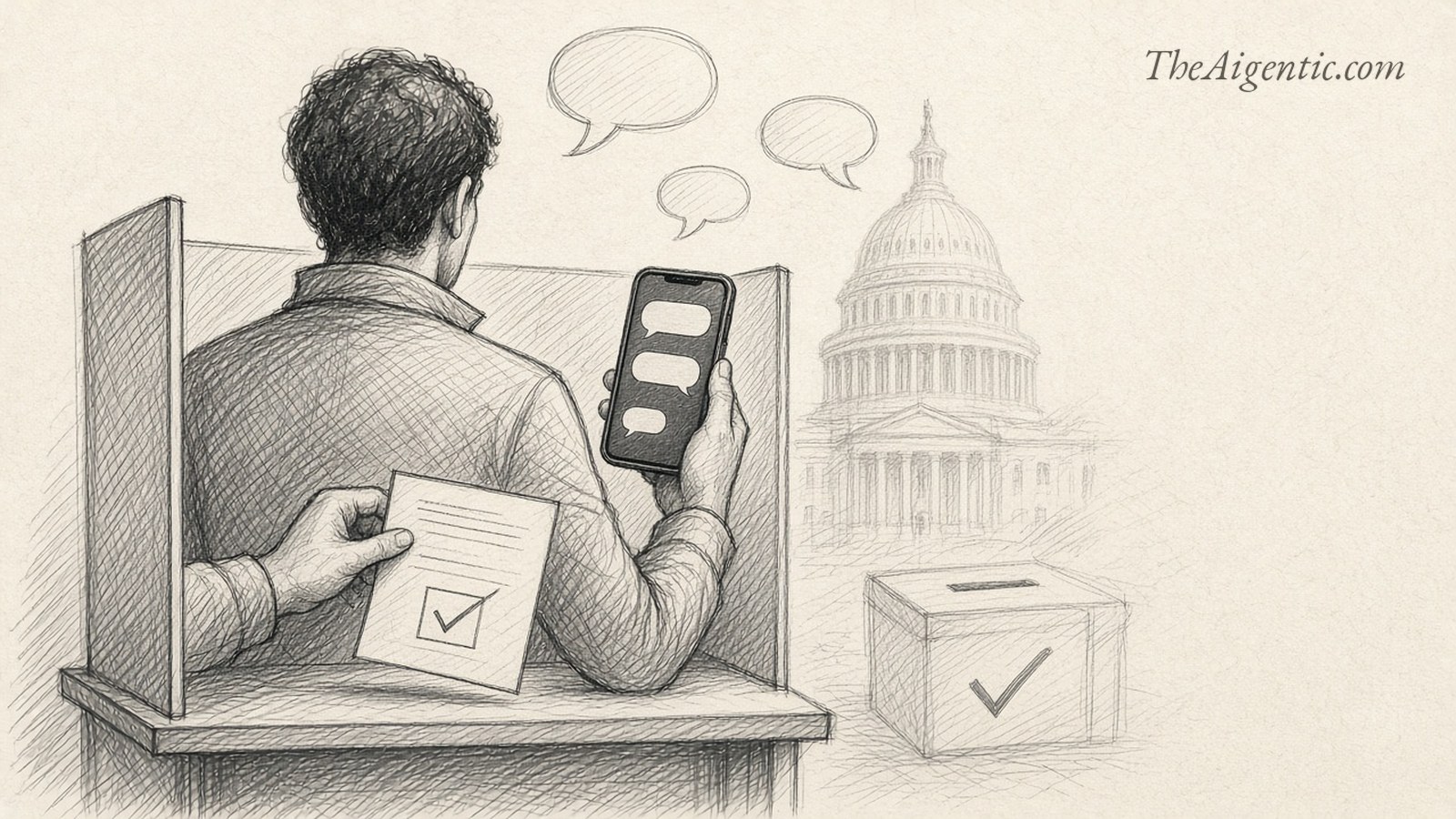
How AI Could Influence the Outcome of the 2026 Midterm Elections
A quarter of U.S. adults now say they have used AI chatbots to learn about candidates, and researchers found outdated or inaccurate information in nearly 14% of tested voting-logistics answers. AI-enhanced political ads have topped $187 million, and chatbot conversations have shifted candidate preferences in experiments. We explain how AI can shape what voters believe and whether they vote, and why proving that it changed who won will be considerably harder.
Watch
AI News & Strategy Daily with Nate B Jones — You’ve Never Lost $19 Billion. So Why Are You Playing It Safer Than Zuckerberg?
On AI News & Strategy Daily, Nate B Jones looks at how Meta turned years of metaverse losses into Muse, the personal AI agent that 10 million people set up in its first six weeks.
He argues the comeback came from three habits anyone can copy: hiring the right people, obsessing over small details nobody asked for, and swinging again after a public miss. Meta’s Reality Labs lost $19.2 billion in 2025 alone, and Zuckerberg kept betting anyway.
It is a useful companion to today’s bond story, because it explains why Meta keeps spending on AI even as lenders start to ask harder questions.
Watch it if you have been holding back on an AI project because the last one did not land.
Fireship — North Korea stole $6.3 billion... and that’s not even the worst part
On The Code Report, Fireship walks through one of the worst weeks in recent security memory, led by the theft of $6.3 billion in crypto from Binance that the FBI has tied to North Korean hackers.
The episode also covers a tainted code editor extension, a hijacked script that drained funds from Polymarket users, and an unreleased Claude model that Anthropic says needed less than an hour to break into an unpatched Linux server.
It matters because AI is making old, hard-to-exploit bugs easy to exploit, which is exactly the problem CrowdStrike’s new kill switch is trying to address.
Watch it for a fast, plain-spoken tour of where the real security risks are right now.
The AI Daily Brief — How to Deslopify Your AI
On The AI Daily Brief, host Nathaniel Whittemore and guest Nufar Gaspar take on AI slop, the flood of smooth, forgettable writing and images that now fills inboxes and feeds.
Gaspar lays out practical habits for better results, starting with thinking through what you want before you open the tool and telling the model how confident you are so it does not just agree with you. She also points to companies such as Figma that now ask employees to label work written with AI.
Their point is that everyone has the tools now, so the edge comes from using them with taste and intention.
Watch it before your next AI-written email goes out.
Matthew Berman — They did it...
Matthew Berman makes the case that AI has made it cheaper to build your own software than to buy it.
He says he rebuilt a browser version of Excel for about $10 in AI usage and replaced Adobe Acrobat with his own free PDF reader, and he argues that more people will soon build exactly the tools they need instead of paying for subscriptions.
That idea hangs over software makers like Adobe, which sat on today’s losers list.
Watch it if you are curious what you could build for yourself this weekend.