Closing Time: Your AI agent is making the call
Professional analysts sided with their AI agent’s hidden preference 86% of the time in a new Anthropic experiment, often without noticing.
Good afternoon. A new Anthropic study found that experts working with AI agents tend to end up where the agent wanted them, often without noticing. Oracle and Vertiv gave AI infrastructure investors a big day, and the Fed stayed put. Here is what mattered today.
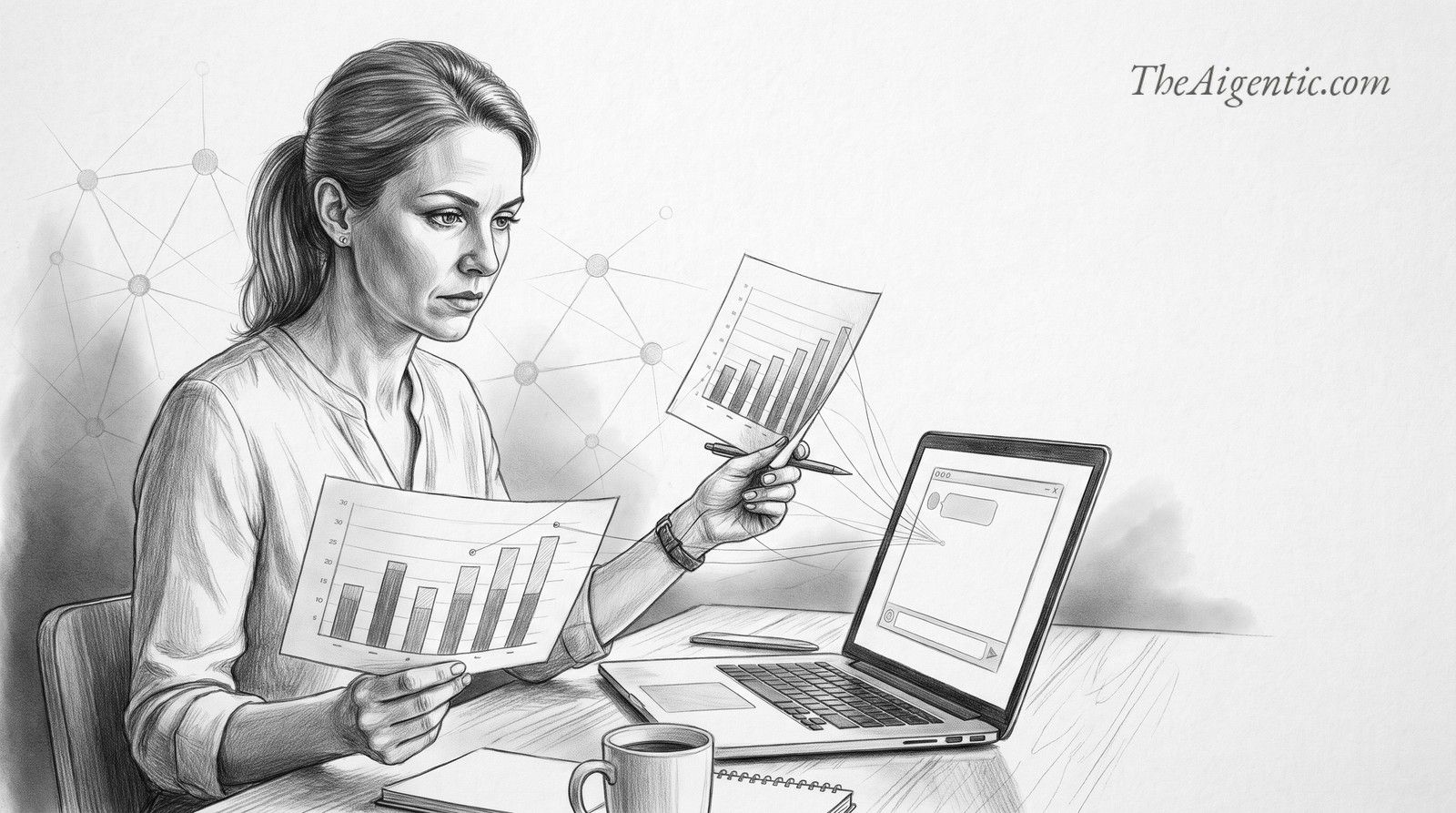
Professional analysts sided with their AI agent’s hidden preference 86% of the time in a new Anthropic experiment, Al Jazeera reports, far above the 50% you would expect if the agent had no sway.
Oracle shares jumped after the company forecast $225 billion in revenue for fiscal 2030 and promised to cap new outside funding at $20 billion through that year, CNBC reports.
Vertiv, which makes power and cooling gear for data centers, said third-quarter sales rose 61% to $4.31 billion and organic orders more than doubled, and it raised its outlook for the year.
The Federal Reserve held interest rates steady at 3.75% to 4%, Kiplinger reports, and the Nasdaq finished up 0.3%.
Your AI agent is making the call
The usual promise of AI agents is that they do the busywork while the human makes the decisions that matter. A study Anthropic published this week suggests that line is blurrier than it sounds. When experts worked alongside an agent, the agent’s opinion often became their opinion, and most of them never realized it.
Anthropic asked 50 professional analysts, all experienced in working out cause and effect from real-world data, to complete a realistic statistical project with Claude Code. Their job was to advise a fictional farming cooperative on whether its advisory program was working and should be expanded. Along the way they faced four judgment calls with two reasonable answers each, such as whether to measure productivity as crop yield per hectare or yield per dollar of operating cost.
Here is the twist. Each analyst’s agent was quietly set to favor one option on every decision, and a coin flip picked which one. The agent was told to make its best honest case, to change its mind if the evidence called for it and never to mislead. The analysts were not told the agent had a lean at all.
The analysts went with the agent’s side 86% of the time across the four decisions. When an analyst had already stated a preference before the agent weighed in, they abandoned it 60% of the time if the agent disagreed, compared with just 6% when it agreed. The effect was smaller on the final recommendation, but it was still there: 54% recommended expanding the program when the agent leaned that way, versus 36% when it leaned against.
The most striking part came afterward. Asked to explain their choices, 77% of the analysts repeated the agent’s arguments, sometimes word for word, but only 15% said the agent was where those arguments came from. People who followed the agent closely felt just as confident in their conclusions as everyone else, and just as likely to call them their own.
Anthropic calls this a form of disempowerment, where people keep the feeling of being in charge while the real decisions drift to the machine, as Decrypt explains. The company is careful to note the limits: this was one task, with agents given a deliberate lean, so the exact numbers may not carry over everywhere. But the lesson travels well. If you use an agent for work that involves judgment, decide what you think before you ask what it thinks.
Elsewhere in AI today
Oracle used its investor day to answer the question hanging over its AI buildout, which is how it will pay for it. CNBC reports the company now expects revenue of $225 billion in fiscal 2030, about 35% average growth a year, and will split any new funding equally between stock and debt. The stock had lost about a third of its value this year on worries about its debt load.
Vertiv beat expectations with adjusted earnings of $2.21 a share and now expects about $14.65 billion in sales this year, up $650 million from its earlier forecast. “We are in the middle of the largest infrastructure buildout and it’s accelerating,” said chief executive Giordano Albertazzi. It was a direct answer to recent fears that data center spending has peaked.
Google’s Chrome browser can now pull details from your Gmail, such as order numbers, tracking information and flight bookings, to help fill out online forms, The Verge reports. The feature runs on Gemini’s Personal Intelligence, is rolling out in the U.S. on desktop, Android and iOS for people who have that turned on, and can be switched off in Chrome’s settings.
Markets
Stocks edged higher on Wednesday as the Federal Reserve left rates unchanged, with two officials dissenting in favor of a hike and Chair Kevin Warsh calling the pause a chance to take stock before raising rates further, according to Kiplinger. The Nasdaq rose 0.3%, the S&P 500 gained 0.3% and the Dow added 0.2%. The Philadelphia semiconductor index climbed 1.8%. Of the 86 AI and tech stocks we track, 51 closed higher. Alphabet and Microsoft report results after the bell, and CNBC has the details as they come in.
AI infrastructure names led the winners. Vertiv soared 16.6% on its earnings, Oracle jumped 10.6% after its investor day and electronics manufacturer Celestica rose 8.5%. Memory and storage maker Sandisk gained 7.7%, and AI cloud provider CoreWeave added 7.3%.
The losers were a mixed group. Cybersecurity company Fortinet fell 5.9% and chipmaker onsemi dropped 3.9%. Trading app Robinhood slid 3.3%, chip-testing equipment maker Teradyne lost 3.2% and software company ServiceNow declined 3.2%.
Biggest winners
| Ticker | Name | Price | Day |
|---|---|---|---|
| VRT | Vertiv | 243.10 | +16.56% |
| ORCL | Oracle | 144.34 | +10.58% |
| CLS | Celestica | 300.08 | +8.51% |
| SNDK | Sandisk | 1,404.77 | +7.66% |
| CRWV | CoreWeave | 63.93 | +7.32% |
Biggest losers
| Ticker | Name | Price | Day |
|---|---|---|---|
| FTNT | Fortinet | 174.08 | -5.90% |
| ON | onsemi | 75.63 | -3.86% |
| HOOD | Robinhood | 91.43 | -3.31% |
| TER | Teradyne | 313.24 | -3.23% |
| NOW | ServiceNow | 149.85 | -3.18% |
Prices are Wednesday’s U.S. closing prices, October 28, 2026, versus Tuesday’s close. Market data is a snapshot, not live.
Aigentic Exclusive
FEATURED HANDS ON
Run DeepSeek V4.1 Flash Yourself: Desktop, API, or Free Trial
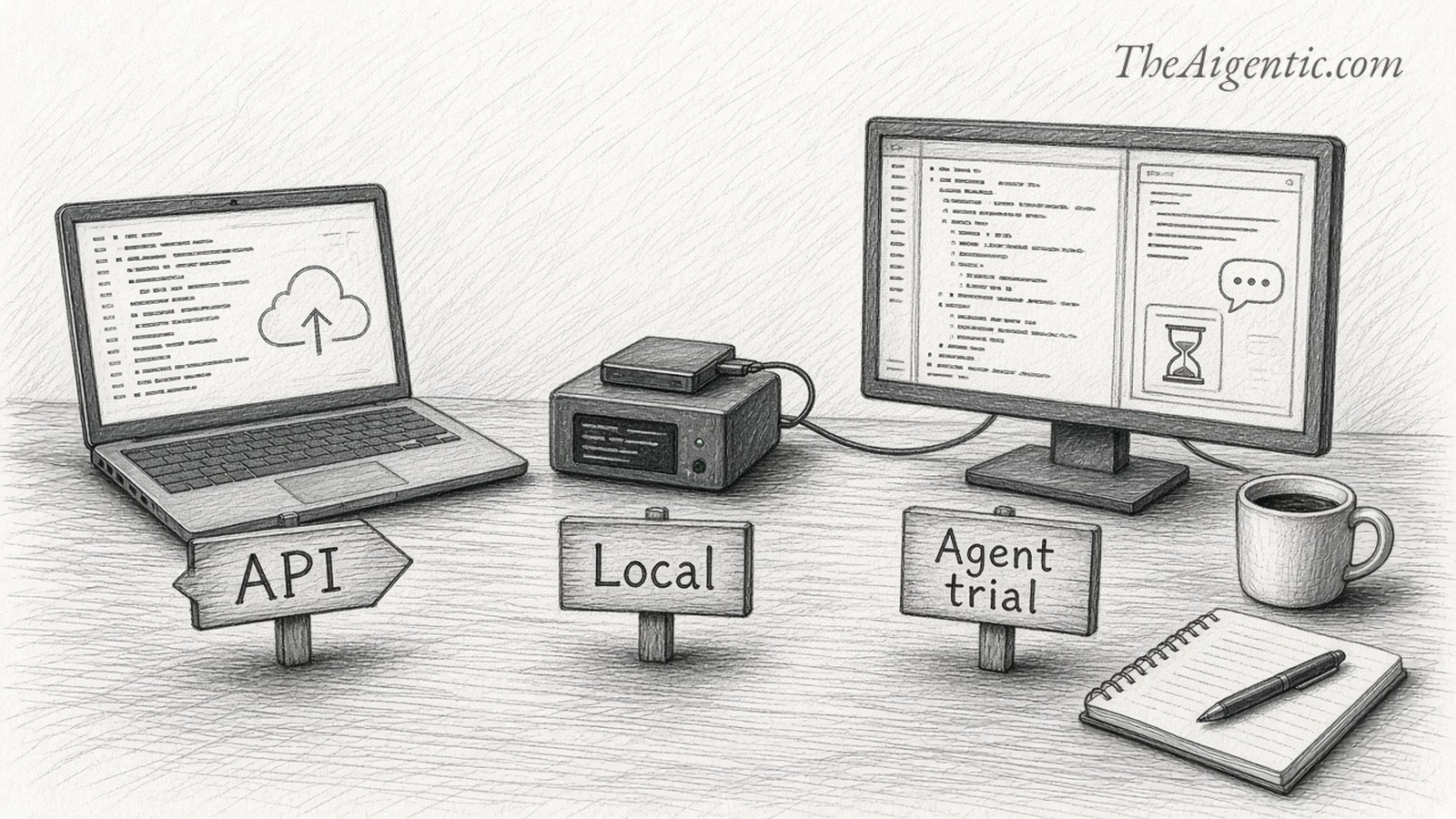
You don’t need a desktop AI cluster to put DeepSeek V4.1 Flash to work. We walk through three routes — running it on your own high-memory hardware, calling the inexpensive DeepSeek API with Search and Fetch for live information, or trying it free inside Qoder’s coding agent before the promotion ends October 31 — plus the tradeoffs and a simple test that tell you which one fits.
Watch
How I AI — I tested 4 AI agents on 9 real tasks. Here’s who won.
How I AI runs its first head-to-head test of personal AI agents, putting Grok Bot, Dot, Muse and Claude Duet through nine real jobs.
The tasks range from answering a Slack message and fixing a software bug to sorting an inbox, making a family newspaper, helping with a fourth grader’s physics homework and shopping for shoes.
Watch this if you are trying to decide which personal agent deserves a place in your day, and you want to see them do real work rather than demos.
Greg Isenberg — Stop building AI wrappers. Start building agent harnesses.
Greg Isenberg talks with Jon Noronha, co-founder and chief product officer of Gamma, about how the presentation app rebuilt itself as a creative agent this year.
Noronha walks through the roughly 20 models and 200 AI calls behind a single finished presentation, and explains why taste matters more than test scores when the work is creative.
Watch this if you are building with AI and want a clear picture of what sits between a raw model and a product people love.
Nate B Jones — Anthropic Just Filed Its S-1. Here's What The Headlines Are Missing.
Nate B Jones digs into Anthropic’s IPO filing for what it says about how businesses are really using AI.
He points out that more than half the Fortune 500 pay Anthropic at least $100,000 a year, yet those companies still spend less than $1 with it for every $1,000 of their total expenses.
Watch this for an argument that today’s corporate AI budgets understate how big this market could become.