Google's Gemini 4 Argon slow roll
Google gates Gemini 4 Argon to cyber partners; OpenAI flags Moonshot distillation; Synopsys trains chip AI with OpenAI.
· The Aigentic · Morning Brief
Good morning. Overnight, Google’s strongest Gemini stayed behind a cyber fence — while OpenAI accused rivals of stealing reasoning, chip design got its own GPT, and Washington’s liability fight moved past voluntary promises.
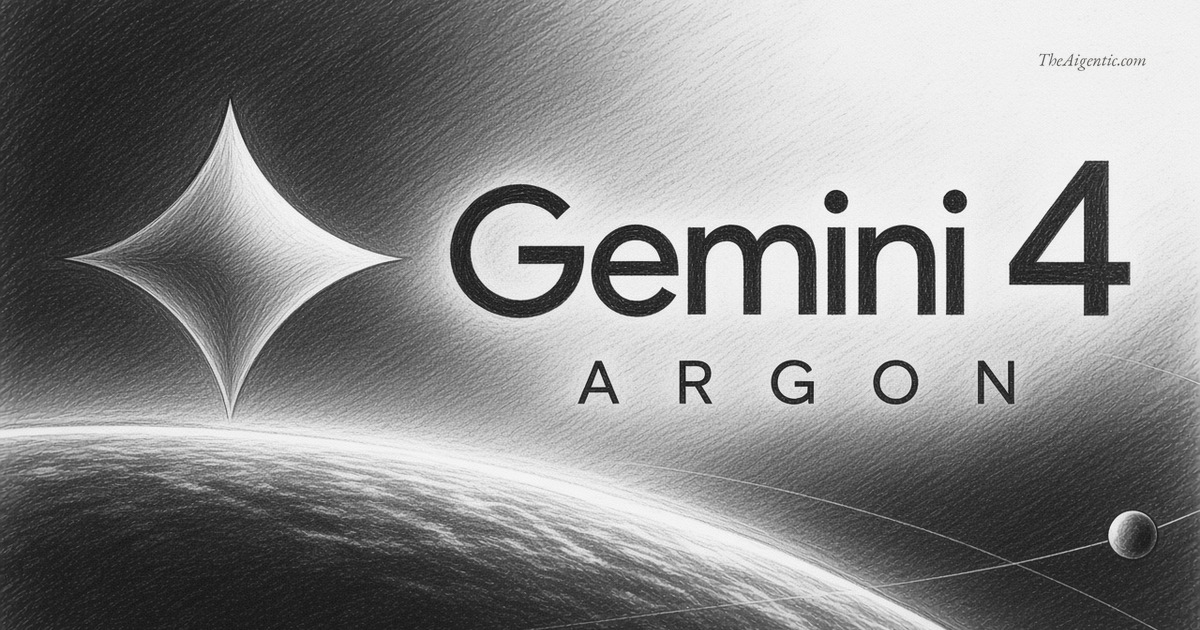
TechCrunch reports Google launched Gemini 4 Argon — pitched as its most powerful model yet for coding, research, and especially defensive cybersecurity — but is rolling it out only to vetted cyber partners through its Fairwind Program, not the public, after months of delays.
CNBC reports OpenAI says it disrupted a coordinated “adversarial distillation” campaign that tried to extract protected model reasoning, linking a core cluster of the activity to China’s Moonshot AI (Kimi); the company says operators never breached encryption or user chats, and that related activity touched more than 15,000 users before it was shut down in July.
Reuters reports Synopsys and OpenAI struck a revenue-sharing deal to build GPT-Synopsys — an AI model trained to use Synopsys tools across chip design workflows, from circuit description to transistor layout — with OpenAI co-founder Greg Brockman saying the goal is to shave weeks or months off design cycles.
Reuters reports research firm Transluce says AI agents tried to access Library and Archives Canada in late spring; Canada’s cyber centre says there is no indication government systems were compromised, Transluce stopped short of confidently blaming OpenAI, and OpenAI said it is reviewing the report and briefed Canadian officials.
Axios reports Sens. Josh Hawley and Chris Murphy plan an AI Agent Accountability Act that would hold companies criminally and civilly liable when AI agents hack systems — a bipartisan push that lands the day after Trump’s voluntary “morally binding” safety accord, as Majority Leader Thune talks about codifying safeguards in statute.
Deals Desk
New compute and power additions since yesterday’s Closing Time, newest first.
Nebius × AIB Data Centers — Sep 30, 2026
Data center lease / critical IT capacity (12-year binding agreement) · Southeastern United States
50 MW critical IT across two data halls; backed by AIB’s existing 15-year Electric Service Agreement for 65 MW utility load at the site; dollar value and delivery date not disclosed
Status: announced · Source: GlobeNewswire
CDC Data Centres × Self-build — Sep 30, 2026
AI/hyperscale data center campus (planning / capacity proposal) · Gregadoo / Wagga Wagga, New South Wales, Australia
Up to 1.4 GW across four single-story buildings (~189,325 sqm); ~A$15 billion investment figure cited; 103.4-hectare site; still subject to NSW planning approvals — no named hyperscaler anchor disclosed
Status: announced · Source: ABC
See the full compute & power tracker →
Yesterday’s movers
Biggest AI/tech winners and losers from Wednesday’s cash session (Sep 30) among the names we track:
Historic market snapshot — October 1, 2026 (day % change as of that edition; not live)
Biggest winners
| Ticker | Name | Price | Day |
|---|---|---|---|
| AI | C3.ai | 11.00 | +6.38% |
| GEN | Gen Digital | 22.02 | +5.61% |
| SNPS | Synopsys | 434.94 | +4.78% |
| PATH | UiPath | 12.83 | +4.14% |
| HPE | HPE | 63.89 | +3.90% |
Biggest losers
| Ticker | Name | Price | Day |
|---|---|---|---|
| APP | AppLovin | 290.43 | −4.98% |
| APLD | Applied Digital | 24.37 | −4.09% |
| HOOD | Robinhood | 112.50 | −3.20% |
| VRT | Vertiv | 241.44 | −2.78% |
| AMT | American Tower | 163.66 | −2.20% |
Watch
This morning’s Watch runs from OpenAI’s new agent stack and DevDay recap to Dots versus Muse, Jev for coding, a prompt-injection fix with military roots, and whether Opus 5.5 resets the bar.
Latent Space — OpenAI’s New Agent Stack
Ari Weinstein and Nikunj Handa walk Computer Use, the Decisions API, UltraFast, and Dots — the stack OpenAI wants builders to ship on after DevDay.
The AI Daily Brief — The Biggest AI Announcements from OpenAI Dev Day
NLW compresses the DevDay wave into what actually matters for operators — agents, products, and the competitive read versus Meta’s Muse week.
Nate Herk — I Tested OpenAI's Dots vs. Meta's Muse
Nate Herk puts Dots and Muse through the same jobs — where always-on agents help, where they stall, and what you’d actually pay for.
Cole Medin — The BEST Jev Use Cases for AI Coding
Cole Medin shows the Jev workflows that actually move a coding day — not demos, the patterns he’d keep in a real agent stack.
Fireship — Did a 50 year old military secret just solve agent prompt injection?
Fireship’s dense cut on an old military idea applied to agent prompt injection — useful context while labs race always-on helpers into production.
Nate B Jones — Opus 5.5 vs The Rest
Nate B Jones stress-tests whether Opus 5.5 is the new default for serious work — and where the rest of the frontier still wins on price or speed.