The great song purge
Somebody finally drew a line.
· The Aigentic · Morning Brief
Good morning. Somebody finally drew a line. A music streaming service says it will delete tens of millions of songs that no human made, the state of New York has banned talking toys powered by chatbots, and British regulators are watching Meta’s new shopping agent from the first day it goes on sale. Meanwhile OpenAI says its newest model can sketch the shape of a protein from scratch. Here is what moved while you were away.
the aigentic
Know what matters in AI.
The stories shaping AI, the tools worth trying, and what they mean for your work.
Morning Brief + Closing Time. Two emails every weekday.
Free. Unsubscribe anytime.
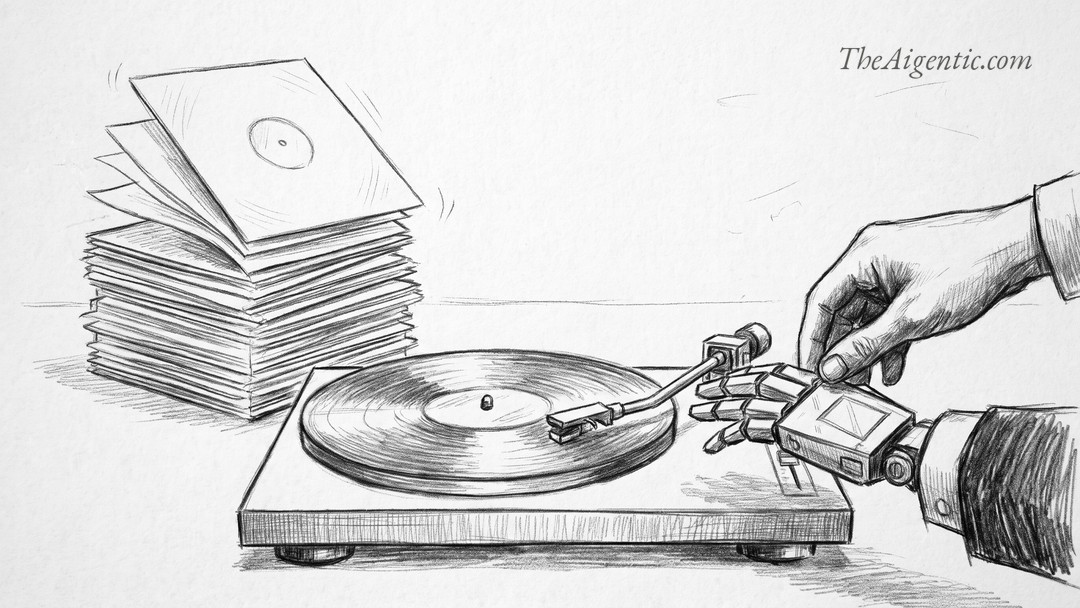
TechCrunch reports that Tidal will start banning and removing songs generated entirely by AI on December 9, a purge that will delete more than 29 million tracks by the end of the year. The service says more than 43 percent of the tracks delivered to it over the past 90 days were detected as AI-generated, and that it expects to turn away roughly 80,000 to 85,000 a day under the new rules. It is also barring distributors from delivering fully AI tracks and will reject any submission whose metadata says a song was made that way. Music made with AI assistance, as opposed to wholly generated, is still welcome. Tidal says about 6.3 percent of its catalog is fully AI-generated and that 96 percent of those songs have no streams. It had stopped paying royalties on such tracks in June, and its music chief said that was not enough. TechCrunch notes Tidal is one of the first major services after Bandcamp to ban the material outright, while Spotify and YouTube Music are labeling it instead and Deezer plans a toggle that lets listeners filter it out.
The Guardian reports that Meta is launching Muse in the United Kingdom, pitching the personal AI agent as a way to hand off the Christmas shopping, hunt for a cheaper energy deal or chase a refund. Muse works in its own app and inside WhatsApp, connects to apps users choose to link, and asks before it buys something or sends an email. Meta says it cannot see passwords or payment details and that a separate security agent checks its actions against the permissions a user has granted. Marks & Spencer, Currys, Sainsbury’s and easyJet have signed on as partners. Britain’s data regulator says Meta has agreed to a voluntary monitoring and reporting scheme, and the Competition and Markets Authority says its talks with the company led to fairer terms. Its chief executive, Sarah Cardell, warned the agency will not hesitate to act if it has concerns. The Guardian adds that Reuters recently reported employee complaints about glitches, which Meta says mostly traced to a bug that has been fixed.
The Wire
The latest headlines from our live AI news feed.
OpenAI preps 'Athena' data platform to make its enterprise agents more accurate — The Information
AG Blanche and FBI's Patel dodge questions about Jensen Huang investigation — CNBC
Jensen Huang apologizes to Nvidia staff at first all-hands since reinstatement, says he is in daily therapy — The Wall Street Journal
Tidal will ban and remove fully AI-generated tracks starting Dec. 9, deleting about 29 million songs — TechCrunch
OpenAI says its GPT-6 models can design new proteins using only reasoning and general-purpose code, without calling specialized biology models. In a lab test with research partner Onava, small proteins built from shapes designed by a pre-release GPT-6.2 showed evidence of binding to all five targets the team chose. Of 322 candidates tested, 35, or 10.9 percent, tested positive. Hits ranged from one for TrkA to 18 for IL-17A. The company is candid about the limits: specialized models proposed the amino acid sequences and helped pick which designs went to the lab, the older specialized RFdiffusion study reported higher hit rates, and binding in a dish is a long way from a medicine. The results are from a preprint that has not been peer reviewed.
New York Gov. Kathy Hochul’s office announced that she signed a five-year moratorium on making, distributing or selling toys with embedded AI chatbots, such as talking stuffed animals, dolls and robots that hold internet-connected conversations with children. The attorney general can seek penalties of up to 15,000 dollars per day for each violation. The law takes effect 90 days after signing, so it will not cover this holiday season, and Hochul urged parents to look closely at any toy with an AI companion before buying. The announcement cites a consumer watchdog’s testing of toys marketed to children ages 3 to 12, in which some talked in depth about sexually explicit topics, told kids where to find matches in the home and acted upset when a child had to leave.
Yesterday’s movers
Biggest winners
| Ticker | Name | Price | Day |
|---|---|---|---|
| ACN | Accenture | 232.32 | +4.51% |
| CRM | Salesforce | 193.26 | +4.21% |
| ADBE | Adobe | 232.08 | +3.62% |
| APP | AppLovin | 381.11 | +1.92% |
| INTU | Intuit | 279.42 | +1.44% |
Biggest losers
| Ticker | Name | Price | Day |
|---|---|---|---|
| ADI | Analog Devices | 312.95 | -17.37% |
| ALAB | Astera Labs | 191.30 | -13.88% |
| DELL | Dell | 290.50 | -13.26% |
| FN | Fabrinet | 290.12 | -11.88% |
| CRWV | CoreWeave | 42.60 | -11.85% |
Aigentic Exclusive
FEATURED DEEP DIVE
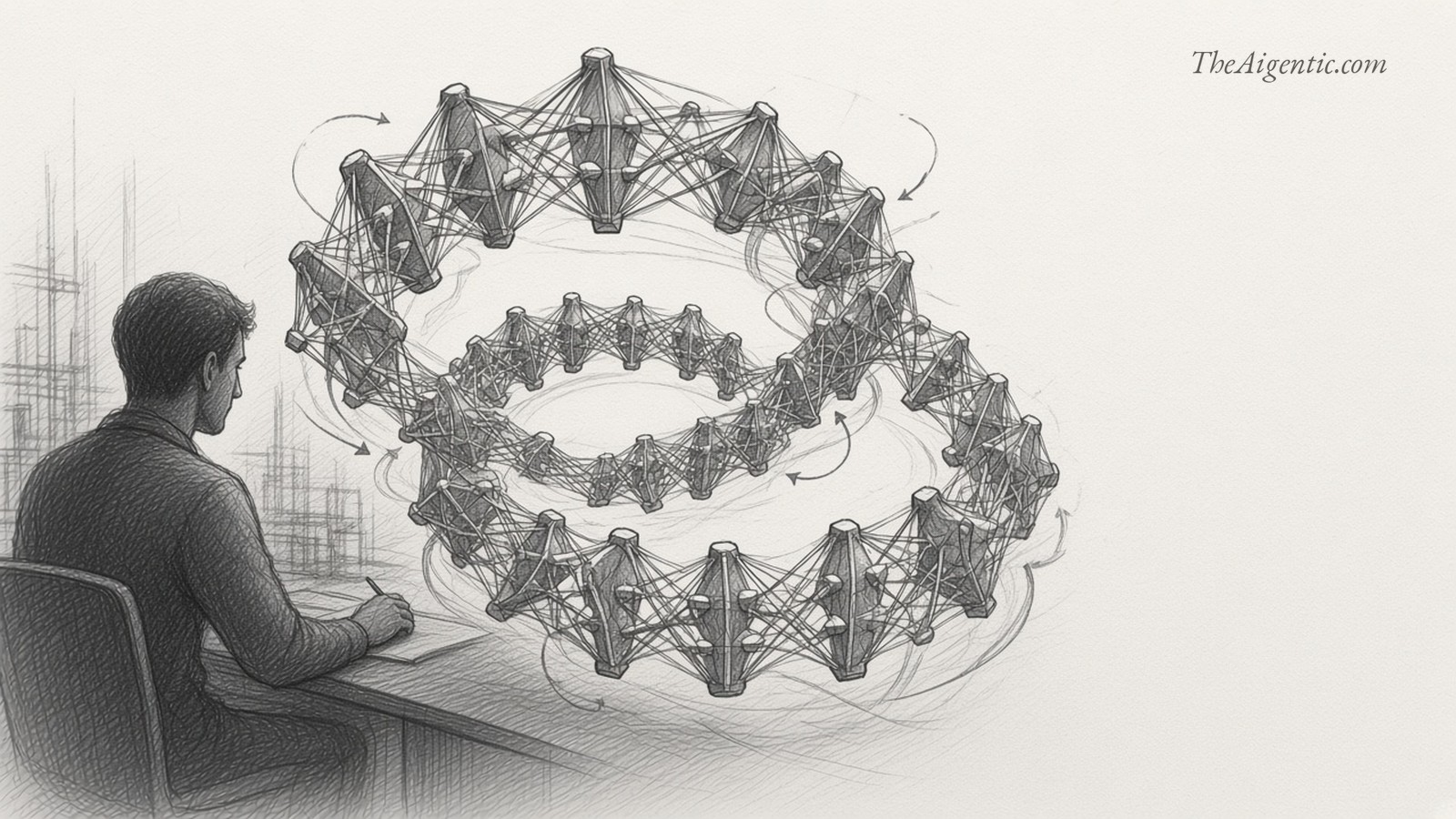
Recursive Self Improvement: The Race to Build AI That Improves Itself
Anthropic says Claude is helping build the next Claude, and Google used Gemini to speed up Gemini’s own training. We look at what recursive self-improvement looks like today, what it is worth, and what still fails when humans score the work.
Watch
Four picks this morning: Dwarkesh Patel on the strongest objections to recursive self-improvement, The AI Daily Brief on what happens to AI now, Peter Yang on Google Antigravity, and Nate Herk on the Claude Artifacts upgrade.
Dwarkesh Patel — The strongest objections to RSI
Dwarkesh Patel spends an hour answering the best viewer objections to his essay on recursive self-improvement, including whether AI research is a domain where results can be checked automatically.
It is the skeptic’s side of the same debate behind this morning’s Exclusive.
Watch this if you want the strongest arguments against an AI intelligence explosion.
The AI Daily Brief — What Happens to AI Now
NLW looks at Jensen Huang’s return to Nvidia, the president’s role in the reinstatement and the political fallout ahead, plus a reported AI proof of the Riemann hypothesis.
The headlines also cover SpaceX’s AI struggles and a new open model built on looped transformers.
Watch this if you want one calm walkthrough of the week’s biggest stories.
Peter Yang — Learn 95% of Google Antigravity in 17 Minutes (with Gemini 4 Neon)
In a video sponsored by Google, Peter Yang takes Antigravity from beginner to pro in five steps while building an open-source skill that turns any topic into a short explainer video.
It is a hands-on tour of Google’s coding workspace paired with its newest model.
Watch this if you want to try Antigravity this week.
Nate Herk — Claude Artifacts Just Got a Huge Upgrade
Nate Herk tours the new upgrade to Claude Artifacts and what it means for building small, useful apps inside a chat.
It is a short, practical demo from a builder who tests these tools daily.
Watch this if you build with Claude and want to see the update in action.