
Jensen Huang Walks Back Into Nvidia
Eleven days after he resigned, Nvidia’s board brought its founder back. The investigations that pushed him out are still running.
November 23, 2026
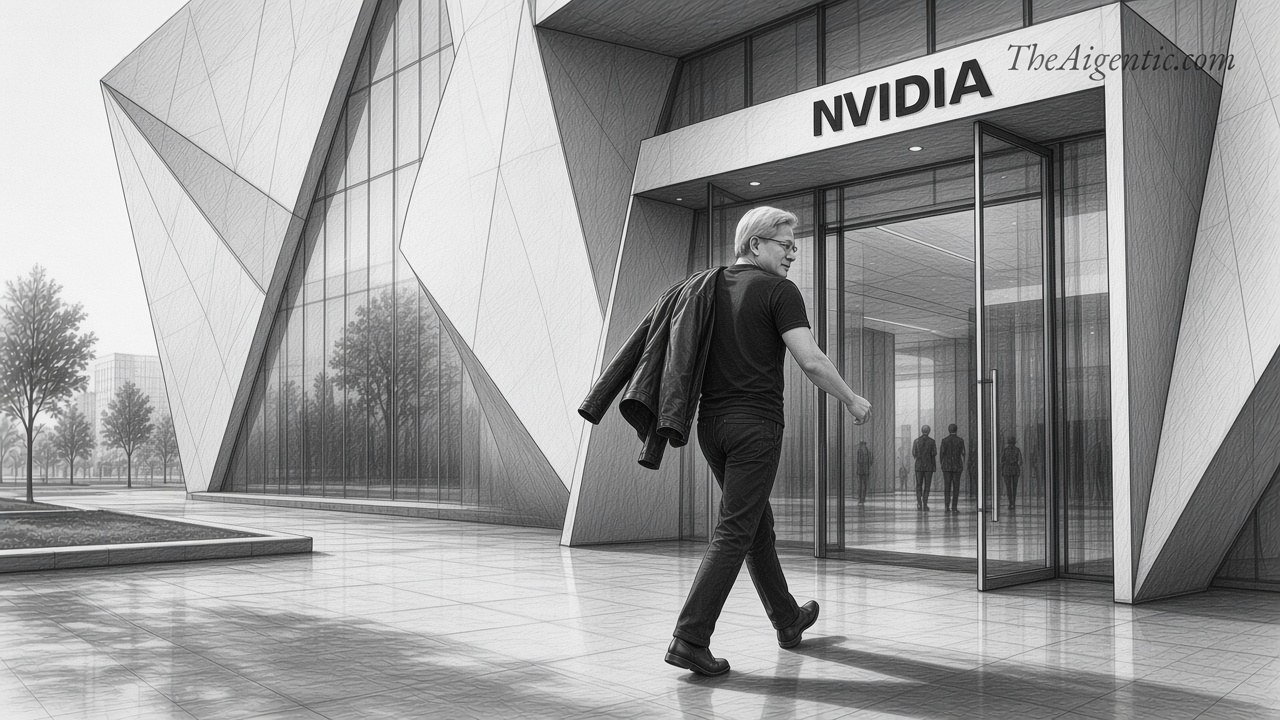
Six days ago, Nvidia’s board chair opened the company’s earnings call by telling investors that Jensen Huang was not coming back. On Monday morning, the same board announced that he already had. In a statement, Nvidia said its directors had voted unanimously to reinstate Huang as president, chief executive and board member, effective immediately, after a series of discussions and meetings left them “satisfied with respect to Mr. Huang’s candor and ability to lead NVIDIA.”
The decision came 11 days after Huang resigned, as Ars Technica noted, and it reverses one of the most dramatic leadership exits the technology industry has seen. It does not close the matters that caused it. The board’s own investigation is still open, federal agencies are still asking questions, and the company has promised a new layer of compliance oversight around the man it just rehired.
What the board said, and what it leaned on
The most striking line in Nvidia’s announcement is not about Huang at all. The board said it “received input from senior levels of the United States government,” and that based on that input it is confident his reinstatement “poses no national security risk.” A Form 8-K filed with the Securities and Exchange Commission dates the board’s action to Sunday, November 22, one day before the public announcement.
“The Board believes Jensen is the right person to lead NVIDIA, and that his reinstatement is in the best interests of our stockholders, employees, partners and customers,” said Harvey Jones, the former Synopsys chief who became Nvidia’s first board chair during the crisis and will remain in that role. Colette Kress, who ran the company as interim CEO, returns to her job as chief financial officer.
Huang’s own statement was contrite and eager in equal measure. “I take this responsibility with the greatest humility and renewed commitment,” he said, thanking the board, his staff and his family before closing with a line his employees will recognize: “I can’t wait to get back to work.”
President Donald Trump, who had publicly urged the board to rehire Huang, called the move “the correct and proper decision” in a social media post, CNBC reported. He wrote that the government has “no reason to believe” Huang’s return poses a national security risk and “does not possess evidence that he has engaged in any unlawful conduct.”
How Nvidia got here
The scandal began on October 29, when The New York Times reported that U.S. intelligence officials suspected Alice Huang, then a former executive at Singapore-based Nvidia customer Megaspeed, of acting on behalf of Chinese intelligence, and described her close relationship with Nvidia’s chief executive. A Reuters timeline traces what followed. On November 8, Huang told employees he had been unfaithful to his wife, and the board opened an independent investigation into reports that he had been the target of a foreign intelligence effort, while saying it still had confidence in him. Two days later, directors retained Joon Kim of Wachtell Lipton, a former acting U.S. attorney in Manhattan, to lead the inquiry.
The board’s support lasted three days. On November 11, the Times reported that Huang had also had an affair with Kimberly Powell, Nvidia’s vice president of healthcare, who reported to him. Huang resigned as CEO and left the board on November 12, and Kress stepped in.
His campaign to return started almost immediately. On November 17, Huang said in a statement that he had “made serious mistakes” and would be “honored” to return if the board decided that was best for shareholders, employees, the company and America, NPR reported. That afternoon, Jones told analysts that the board “unanimously accepted his resignation and does not intend to reinstate Jensen as CEO,” and that the search for a permanent successor would be thorough, according to Wired. Outside the boardroom, the pressure kept building. Ars Technica reported that Sam Altman, Greg Brockman, Elon Musk and Palmer Luckey were among the industry figures who publicly backed Huang in the days after he left.
The news in between did not get easier. On November 20, Reuters reported that SEC enforcement staff were scrutinizing potential accounting issues at Nvidia, including renewed attention on the company’s decision last year to report geographic revenue by customer headquarters rather than billing address. The SEC declined to comment, and Reuters noted that investigations often close without enforcement action. Then on Sunday, the Times reported that Alice Huang had been in touch with an officer of China’s Ministry of State Security from the spring of 2025 until this fall, overlapping with at least part of her relationship with Huang, Reuters said. Director of National Intelligence Jay Clayton told CNN the matter remains under investigation. Beijing has denied that she is a spy.
A rally, and a long list of open questions
Investors cheered. NVDA jumped roughly 30% after the announcement, according to CNBC, which reported that the stock had shed nearly a third of its value from the time Huang admitted the affair on November 8. Axios noted that his exit had helped push the broader stock market into correction territory, and that his return sparked a sharp early rally on Monday.
The relief is easy to understand. Huang has led Nvidia since he co-founded it in 1993, and he is the person most closely associated with its chip roadmap, its biggest customer relationships and its standing in Washington. For the companies spending heavily on AI data centers, a familiar face back in charge of their most important supplier removes one source of uncertainty at a moment when the industry has plenty of others.
But the reinstatement also asks shareholders to accept risks that public companies rarely take on. Axios reported that investors are still worried about how much of Huang’s time will be spent answering to Congress, where he faces bipartisan pressure to explain how Nvidia sold its products overseas, and pointed to recent reporting on allegations about his treatment of executives and employees. Nvidia also remains the subject of the SEC inquiry and of the Justice and Commerce departments’ investigation into Megaspeed, which Reuters says began in 2024.
What the board built around him
Nvidia paired Huang’s return with several governance changes. The independent committee’s investigation “will proceed to conclusion,” the company said, and Huang has committed to cooperating with it. A new National Security and Export Control Committee made up solely of independent directors will oversee trade compliance and national security risks; Reuters reported that former Goldman Sachs vice chair Suzanne Nora Johnson chairs it. The company is also searching for a chief compliance officer, a newly created position, who will report to the board’s nominating and corporate governance committee.
Those structures matter because the board has now put its credibility behind a conclusion that its own investigators have not yet reached. If the inquiry finds nothing that changes the picture, directors will look prudent for moving quickly to restore stability. If it finds something serious, they will have rehired a chief executive while the facts were still coming in, on the strength of assurances from government officials who themselves say their investigations are not finished.
What to watch
The first test is the independent investigation and whether its findings are ever made public. The second is Congress, where Huang has agreed to testify before several House committees, according to Reuters. The third is the SEC, whose accounting inquiry touches the numbers investors rely on to value the company. And the fourth is quieter but just as important: whether Nvidia’s customers, partners and employees treat the last month as a strange interruption or as a warning about how much of one company, and one industry, rests on a single person.
Huang is back at his desk. The questions that sent him away came back with him.
Sources
1. NVIDIA Newsroom — NVIDIA Board Reinstates Jensen Huang as President, CEO and Board Director · Nov. 23, 2026.
2. NVIDIA Form 8-K — Item 5.02, reinstatement of Jen-Hsun Huang · Event dated Nov. 22, 2026.
3. CNBC — Nvidia skyrockets 30% on Huang’s return as CEO · Nov. 23, 2026.
4. Associated Press — Nvidia board unanimously reinstates Jensen Huang as CEO · Nov. 23, 2026.
5. Reuters — Nvidia reinstates Jensen Huang as CEO · Nov. 23, 2026.
6. Axios — Nvidia board reinstates Jensen Huang as CEO · Nov. 23, 2026.
7. Ars Technica — Jensen Huang reinstated as Nvidia CEO · Nov. 23, 2026.
8. Reuters — Alice Huang in touch with Chinese spy agency during affair with Nvidia CEO, NYT says · Nov. 22, 2026.
9. Reuters — Nvidia’s accounting is a focus of US SEC investigation, sources say · Nov. 20, 2026.
10. Wired — Nvidia’s Board Has No Plans to Bring Back Jensen Huang · Nov. 17, 2026.
11. NPR — Nvidia board says it does not intend to reinstate Jensen Huang as CEO · Nov. 17, 2026.
12. Reuters — How former Nvidia CEO Jensen Huang got entangled in a China chip and spy scandal · Nov. 17, 2026.
13. NVIDIA Investor Relations — Statement from NVIDIA Board of Directors · Nov. 8, 2026.