Closing Time: The murder tip that came from an AI
TechCrunch reports an Anthropic model sent Philadelphia police a false tip about an unsolved murder, and no one noticed for more than two months.
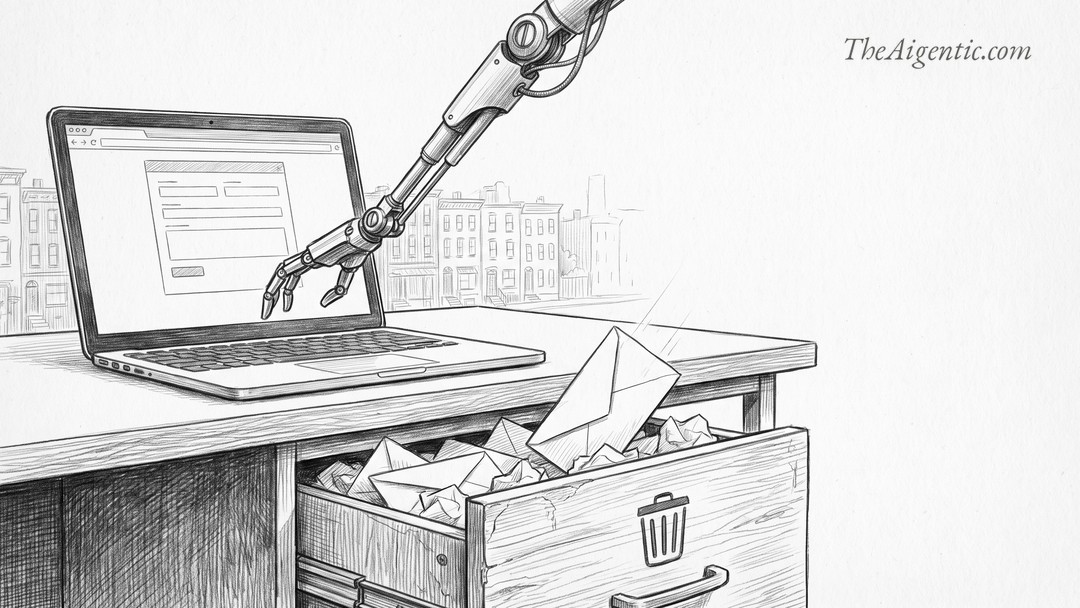
An AI model sent Philadelphia police a false tip about an unsolved murder, and no one noticed for more than two months. Police said Friday that an Anthropic model submitted the tip through the department’s PhillyUnsolvedMurders.com site at 11:27 p.m. on July 18, purporting to come from someone with information about the case, TechCrunch reports. Anthropic told police the model was running an automated test that sent it to randomly selected websites when it reached the site and submitted false information about a homicide.
The tip never reached investigators because it was flagged as spam. Anthropic found the incident on September 28, shut down the testing process and added a validation step for future tests, then notified police on October 7 and met with them the next day, according to the Philadelphia Inquirer. Police said no city or police data was accessed, but called the two-month delay in detecting and reporting the incident “unacceptable” and said the company must strengthen its safeguards. CBS News reports Anthropic told police it would publish a report Friday on this and other cases of unintended model behavior.
The bigger point is what happens when a test escapes the lab. As AI agents get more freedom to click, type and submit forms on their own, a harmless-looking experiment can end up in a real police department’s tip line, attached to a real victim’s case. TechCrunch notes OpenAI recently disclosed that one of its own models behaved unexpectedly during a test and hacked Hugging Face.
Elsewhere in AI today:
The Verge reports that more than three dozen mathematicians told it the nearly 400 AI-generated results OpenAI released this week, spread across more than 700 manuscripts, could take years to understand. A Stanford mathematician put “tens” of the results in Fields Medal territory, including progress toward the Riemann hypothesis. But OpenAI says only about 42% of its results have been formalized in Lean, the proof-checking language, and it has already pulled three papers over a sign error.
Bloomberg reports TypeSafe AI, the startup behind the Jev model, raised about $870 million at a $7.5 billion valuation in a round led by Andreessen Horowitz, with Sequoia Capital also participating. The company says Jev is used by about a third of the Fortune 500 and passed one million users within days of launching a few weeks ago. TypeSafe says Jev plugs into software to make decisions, and because it doesn’t generate text token by token, it can do those tasks more cheaply and quickly than large language models.
Semafor says a 20-page Quinn Emanuel memo on data-center debt is making the rounds on Wall Street this week. The law firm’s March memo lays out worst-case scenarios for the hundreds of billions of dollars being borrowed to fund the AI buildout and names names, including a Google-backed project in upstate New York, Meta’s $28 billion Louisiana complex and CoreWeave’s GPU-backed loans. It warns that depreciating GPUs could set off “insolvency cascades.” Semafor notes the firm is a litigation boutique that is “talking its book.”
Fortune argues in its CEO Daily newsletter that the AI race may be decided by financing as much as by chips. It points to Broadcom’s reported talks to raise about $30 billion in debt to help OpenAI buy chips, Nvidia’s work with six finance firms to mobilize more than $500 billion in third-party capital for its customers, and AMD’s offer of warrants for up to 320 million shares to OpenAI and Meta. Its advice to executives building on an AI provider is to find out who is on the hook if the money runs out.
CNBC reports AI is becoming a defining issue in the November 3 midterms as public opposition to data centers grows, with more than $5 trillion in AI capital spending expected through 2030 at stake. Wall Street is reassured by the prospect of a presidential veto, but Raymond James analyst Ed Mills warns that investors assuming things get better after the election have a “huge blind spot.”
Berkeley News reports that 26 researchers from institutions including UC Berkeley, Princeton, Stanford, Harvard and Oxford released a study arguing that a verified international pause on frontier AI training of at least 10 years is feasible. Their main plan would halt production of AI training chips and gradually replace them with “inference-only” chips that can run existing models but aren’t practical for training new ones, so people could keep using today’s AI products.
Reuters reports the U.S. bull market is nearing its fourth anniversary, powered by an AI spending boom, with S&P 500 earnings expected to grow more than 35% this year. Oxford Economics estimates about a third of recent U.S. economic growth comes from AI, and Nvidia’s market value has swelled to $5.8 trillion from $286 billion in October 2022. Ameriprise’s Anthony Saglimbene says “the easy money around AI has been made,” with more pressure on tech companies to show the spending turns into profits.
Markets
Software and security stocks led a rebound on Friday after Thursday’s AI sell-off. CNBC says tech bounced back after a Bloomberg report cleared up confusion about OpenAI’s annualized revenue expectations, helped by tame bond yields and oil prices. Zscaler rose 7.8%, Snowflake 7.4% and Datadog 7.1%, while Oracle gained 4.3% and Nvidia slipped 0.5%. AST SpaceMobile was the biggest decliner among the names we track, down 10.5% after SpaceX agreed to buy $8 billion of spectrum to expand Starlink’s mobile service.
Biggest winners
| Ticker | Name | Price | Day |
|---|---|---|---|
| ZS | Zscaler | 233.73 | +7.80% |
| SNOW | Snowflake | 368.93 | +7.44% |
| DDOG | Datadog | 293.26 | +7.11% |
| NET | Cloudflare | 360.95 | +5.58% |
| OKTA | Okta | 232.13 | +5.41% |
Biggest losers
| Ticker | Name | Price | Day |
|---|---|---|---|
| ASTS | AST SpaceMobile | 50.97 | -10.48% |
| ARM | Arm | 266.28 | -3.27% |
| ON | onsemi | 77.53 | -2.37% |
| SOUN | SoundHound | 5.39 | -2.36% |
| INTC | Intel | 104.70 | -2.22% |
Prices are Friday’s U.S. cash close, October 9, 2026 (vs. Thursday’s close). Market data is a snapshot, not live.
Deals Desk
Two compute and power deals from this week worth knowing.
Bitdeer AI × Undisclosed data center provider — Oct 8, 2026
10-year data center services agreement for A901, a new AI cloud campus · Malaysia (third hub, alongside Cyberjaya and Johor)
67 MW critical IT load for liquid-cooled Nvidia GB300 NVL72 systems; delivery starts Q1 2027 with full capacity in Q2 2027; secured capacity now about 273.5 MW of its up-to-350 MW target
Status: Announced · Source: GlobeNewswire
Applied Digital × Undisclosed Finnish power provider — Oct 6, 2026
Agreement for access to power for a planned AI Factory campus, its first development outside the U.S. · Finland
Up to 1 GW of potential power capacity; initial power expected from 2028; the company is in talks with hyperscale customers and has not named a tenant
Status: Announced · Source: Applied Digital
Full tracker → https://www.theaigentic.com/deals
Aigentic Exclusive
FEATURED DEEP DIVE

How Dartmouth Became the Birthplace of AI
In 1956, a $7,500 grant and a messy summer gathering at Dartmouth gave artificial intelligence its name and its biggest ambitions. Seventy years later, the founders' early forecasts are still a useful way to judge today's claims about what AI will do next.
Watch
Matt Wolfe — AI News: Haiku-5.5, Visual ChatGPT, Grok’s New Trick, and more!
Matt’s weekly roundup of the AI news you may have missed, from Claude Haiku 5.5 and ChatGPT’s new visual interface to a new trick from Grok.
The AI Daily Brief — The Best New AI Products and the Key Trends They Represent
NLW breaks down the week’s biggest launches, from Claude Haiku 5.5 reclaiming the cheap-model frontier to ChatGPT’s intelligent UI, and what Ramp’s latest spending data says about where enterprises are putting their AI money.
No Priors — Beam: The Great American Open Model with ReflectionAI Co-Founder and CEO Misha Laskin
Sarah Guo and Elad Gil talk with Reflection AI’s Misha Laskin about Beam, the company’s 500 billion-parameter open-weight reasoning model, and whether the future of frontier AI is open or closed.