Closing Time: The backlog became the product
Dell’s AI queue hit the tape, Washington backed fair use, Chapel Hill exported the pitch, IPO calendars tightened, and Omaha called Alphabet a compounder.
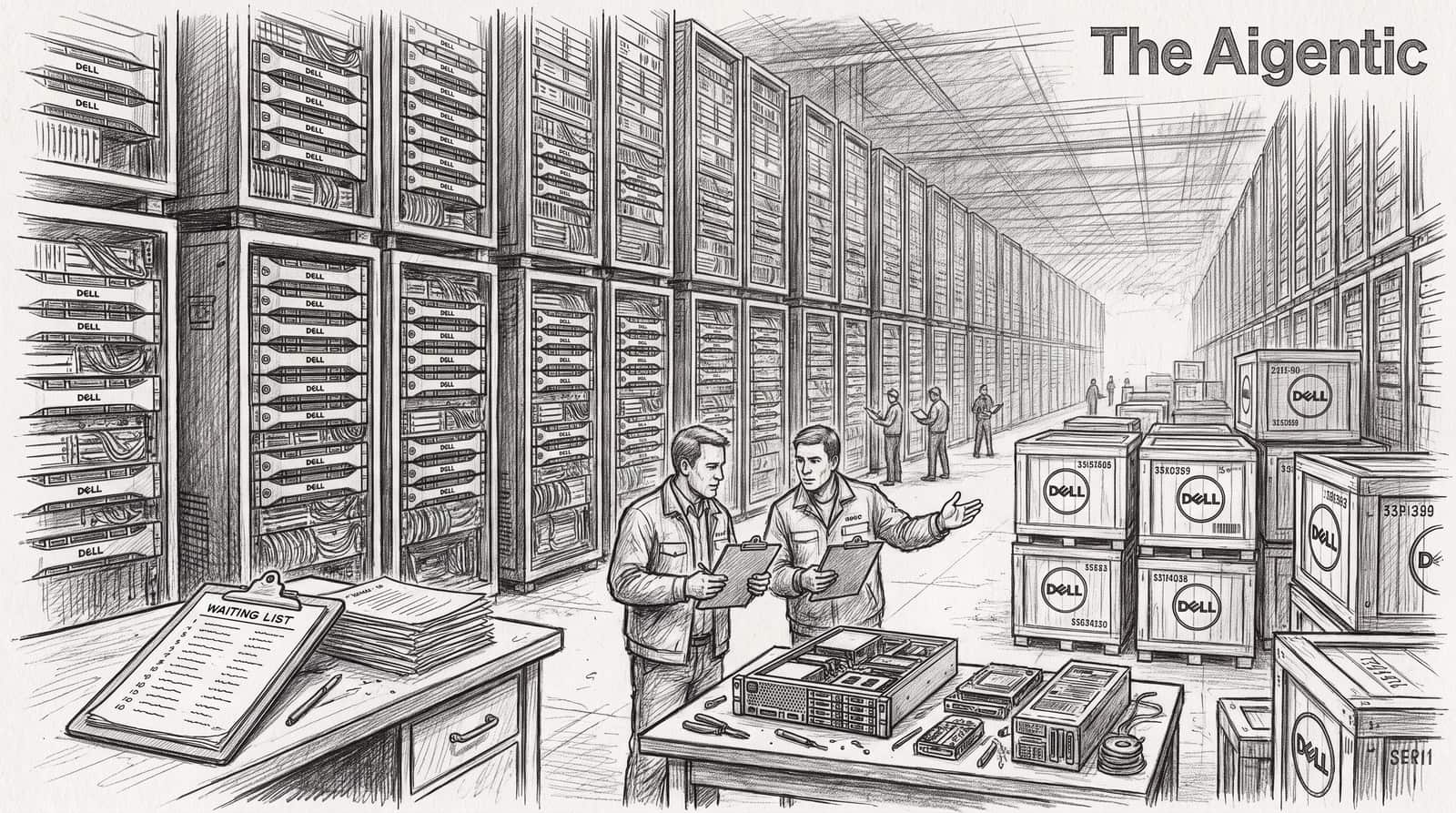
Dell Technologies booked a record $60.9 billion in AI server orders in its fiscal second quarter and exited July with a $95 billion AI backlog, then raised full-year guidance, CNBC reported.
The Trump administration filed a 20-page brief backing OpenAI in The New York Times copyright fight, arguing that training large language models on copyrighted works generally counts as fair use, TechCrunch reported.
At the G20 Innovation Ministerial in Chapel Hill, Commerce Secretary Howard Lutnick urged countries to embrace fair use for AI training while protecting artists, and Nvidia CEO Jensen Huang warned against rules aimed at “theoretical harms,” Reuters reported.
OpenAI and Anthropic are balancing growth pitches and safety assurances ahead of potentially record IPOs, with Anthropic’s public prospectus possibly arriving as soon as next week, Axios reported.
Berkshire Hathaway CEO Greg Abel called Alphabet a “significant player” in AI after the conglomerate added about $17 billion of Alphabet shares in the second quarter, CNBC reported.
Today’s Biggest Moves
Historic market snapshot — September 2, 2026 (day % change as of that edition; not live)
Biggest winners
| Ticker | Name | Price | Day |
|---|---|---|---|
| DELL | Dell Technologies Inc. | 492.00 | +15.76% |
| TTD | The Trade Desk, Inc. | 14.55 | +5.59% |
| HOOD | Robinhood Markets, Inc. | 106.99 | +3.36% |
| NVDA | NVIDIA Corporation | 224.35 | +3.18% |
| ORCL | Oracle Corporation | 145.76 | +3.14% |
Biggest losers
| Ticker | Name | Price | Day |
|---|---|---|---|
| MDB | MongoDB, Inc. | 375.40 | -13.54% |
| PANW | Palo Alto Networks, Inc. | 327.73 | -9.49% |
| DDOG | Datadog, Inc. | 209.23 | -6.53% |
| PLTR | Palantir Technologies Inc. | 169.46 | -5.81% |
| CRWD | CrowdStrike Holdings, Inc. | 203.42 | -5.42% |
1. The backlog became the product
Dell Technologies reported fiscal second-quarter results that turned the AI buildout into a factory-floor story rather than a chip-only one. The Round Rock company booked a record $60.9 billion in AI server orders in the quarter ended July 31, recognized $16.4 billion in AI-optimized server revenue (up 100% from a year earlier), and exited with a $95 billion AI backlog. Total revenue hit about $47 billion, up roughly 58%, and Dell raised its fiscal 2027 outlook to about $192 billion in revenue and $25.50 in adjusted earnings per share, while lifting AI server revenue guidance to about $74 billion.
That matters because the gap between orders and shipments is now the product. COO Jeff Clarke told analysts the AI pipeline kept growing and remains multiples of the backlog even after Dell converted $131.7 billion into orders over the past twelve months, with more than 6,500 AI customers on the books. Investors treated the print as proof that GPU demand spills into racks, networking, storage, and deployment engineering, and DELL jumped about 16% on the cash session.
The one move is to read the backlog as capacity, not hype. If Dell can keep converting that queue without memory and component shortages eating the timeline, the AI infrastructure trade stops being only about who sells the accelerators and starts being about who can ship the whole room. Read CNBC · Watch the CNBC video
2. Fair use walked into the courtroom
Amanda Silberling at TechCrunch reports that the Trump administration filed a 20-page brief in The New York Times lawsuit against OpenAI, defending the company’s unlicensed use of copyrighted material to train large language models. The brief argues the United States has a strong interest in keeping a competitive AI industry that sets global standards, and that constraining LLM development under a misunderstanding of fair use would hinder American prosperity. The case sits in the Southern District of New York, so the filing is advocacy rather than a ruling, but it puts the executive branch openly on the training-side of the copyright fight.
That matters because publishers have spent years arguing that feeding books and articles into chatbots without a license is theft, while labs argue the training step is transformative. Last year’s Anthropic writers settlement still left Judge William Alsup’s core point intact: the training itself looked more like learning than copying, even as piracy of shadow-library files drew a separate penalty. A White House-aligned brief does not decide the Times case, but it raises the political cost of a ruling that freezes U.S. model training.
The one move is to treat fair use as industrial policy now, not only as a private lawsuit defense. If Washington is willing to say training on copyrighted works is generally fair use, every lab’s data strategy inherits a government brief it can wave at the next plaintiff. Read TechCrunch
3. Chapel Hill wrote the export version
Reuters reports that at the G20 Innovation Ministerial in Chapel Hill, North Carolina, Commerce Secretary Howard Lutnick urged member countries to build rules that let AI companies train on creators’ work under fair use while still finding a way to “protect artists.” Nvidia CEO Jensen Huang appeared alongside him and told officials to avoid regulations aimed at “theoretical harms,” favoring rules for real-world problems instead. The Justice Department’s OpenAI brief landed the same day, tying the domestic courtroom fight to the international talking points.
That matters because Anthropic, OpenAI, Google, and Meta all face creator lawsuits over training data, and a G20 speech is how Washington tries to export its preferred answer. Lutnick did not spell out how countries should balance artists and labs, which leaves the hard allocation for later. Huang’s line against theoretical-harm rules also lands as a warning that slow model releases and forced safety changes can hit profits before they hit proven harms.
The one move is to watch whether “fair use plus protect artists” becomes a slogan or a statute. If G20 partners sign onto training-friendly language without a clear compensation path, the copyright war shifts from U.S. courts to a patchwork of national deals. Read Reuters
4. The IPO calendar got a safety brief
Axios reports that OpenAI and Anthropic are trying to strike the same balance ahead of potentially record-breaking initial public offerings: convince Wall Street that the businesses are sound and fast-growing, while assuring governments that the models do not pose unacceptable risks. Anthropic could file a publicly available prospectus as soon as next week, Axios says, while OpenAI remains in earlier stages of its own IPO process. Both companies’ public messaging is expected to keep swinging between growth optimism and safety caution as those filing windows approach.
That matters because the audience for every product note is no longer only developers and enterprise buyers. Bankers, regulators, and future public shareholders are reading the same memos, and a safety scare or a customer revolt can land inside an S-1 narrative just as easily as a revenue beat. Axios frames the week’s moves as rehearsal for that dual sales pitch rather than as isolated model launches.
The one move is to treat the next prospectus rumor as a calendar, not a vibe. If Anthropic’s filing lands next week, the safety-versus-growth tension stops being a Washington talking point and becomes a securities document. Read Axios
5. Omaha called Alphabet an AI compounder
Tobias Burns at CNBC reports that Berkshire Hathaway CEO Greg Abel told Becky Quick that Alphabet is a “significant player” in artificial intelligence after Berkshire added about $17 billion of Alphabet shares in the second quarter. Abel said Berkshire sees AI benefits inside its own operating companies, which sharpened interest in Google’s position, and he recounted that Warren Buffett and he sized an earlier roughly $10 billion Google stake at a 6.5% discount. Alphabet is now among Berkshire’s largest equity holdings, with about 106 million Class A and Class C shares worth roughly $36.6 billion at the last filing snapshot.
That matters because Berkshire’s endorsement lands while hyperscalers are still spending at a scale that makes ordinary industrial capex look small. Goldman Sachs estimates put global hyperscaler capital expenditure around $1 trillion for 2026, with debate over how much of that is U.S. AI build versus worldwide totals. Abel is not pitching a chatbot; he is arguing that the company selling search, cloud, and custom silicon sits in the middle of that spend.
The one move is to treat the Abel interview as a patience signal. If Omaha is still adding after a year of AI capex anxiety, the bet is that Alphabet’s AI position compounds through the portfolio’s real-world use cases, not through a single model launch. Read CNBC