Closing Time: Meta wants the keys to your day
Muse wants your apps. Mistral just raised Europe’s biggest private-tech check. Firmus locked OpenAI into Malaysia megawatts.
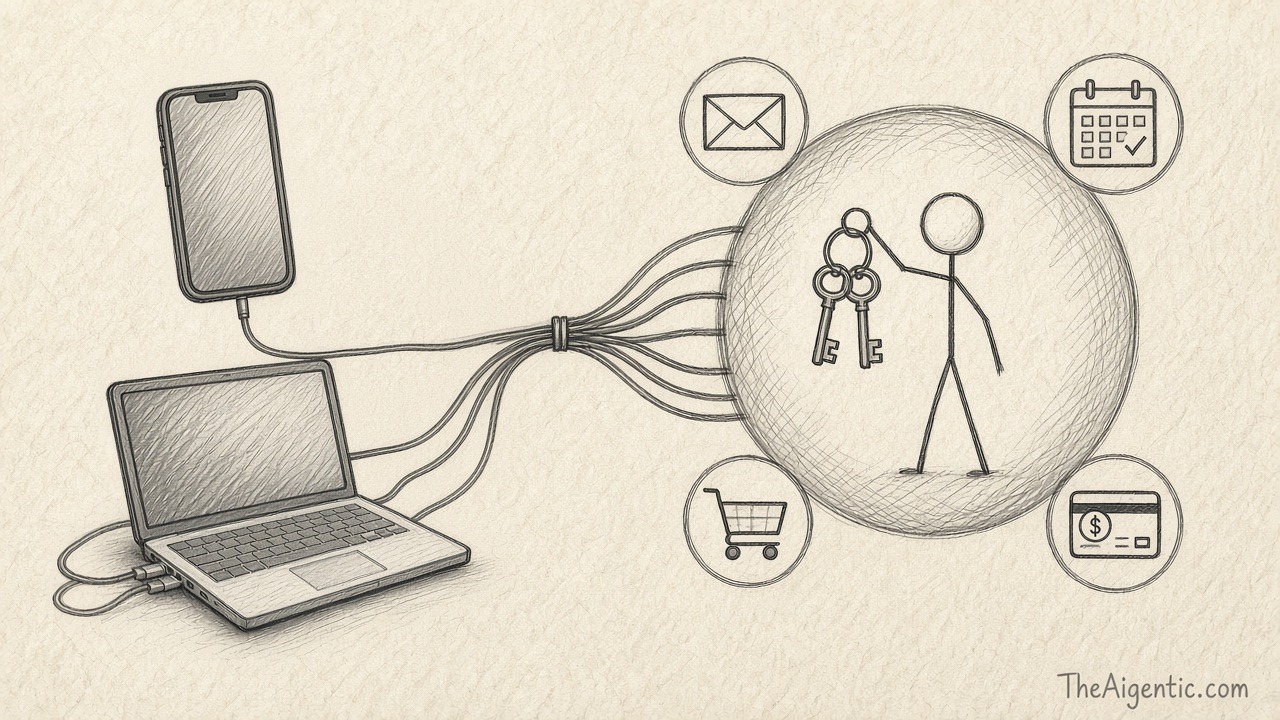
Meta launched Muse, a U.S. personal AI agent that connects to email, calendars, payments, and other everyday apps to send messages, book travel, and check out — less than two weeks after an $18 billion multistate social-media settlement, TechCrunch reported.
French lab Mistral raised €3 billion ($3.5 billion) at a post-money valuation above €21 billion (~$24 billion) in a Samsung-led Series D that it called Europe’s largest private-tech equity raise, CNBC reported.
Nvidia-backed Australian infrastructure firm Firmus signed a multi-year deal to supply OpenAI compute from two Malaysian data centers, lifting Firmus’s contracted capacity above 900 megawatts, Reuters reported.
OpenAI says GPT-6 Astra made substantial progress on longstanding math and theoretical computer-science problems, while Anthropic and Google are also reporting AI-driven mathematics advances, Axios reported.
Today’s Biggest Moves
Historic market snapshot — September 8, 2026 (day % change as of that edition; not live)
Biggest winners
| Ticker | Name | Price | Day |
|---|---|---|---|
| INTC | Intel Corporation | 104.47 | +9.05% |
| COHR | Coherent Corp. | 301.88 | +7.10% |
| STX | Seagate Technology Holdings | 904.38 | +6.49% |
| AMD | Advanced Micro Devices, Inc. | 505.74 | +5.90% |
| CLS | Celestica Inc. | 329.97 | +5.64% |
Biggest losers
| Ticker | Name | Price | Day |
|---|---|---|---|
| PATH | UiPath, Inc. | 14.01 | -7.77% |
| SHOP | Shopify Inc. | 134.10 | -7.57% |
| TEAM | Atlassian Corporation | 176.42 | -6.94% |
| NOW | ServiceNow, Inc. | 134.21 | -4.99% |
| INTU | Intuit Inc. | 318.93 | -4.14% |
Meta wants the keys to your day
Sarah Perez at TechCrunch reports that Meta introduced Muse on Tuesday for U.S. users, pitching a personal AI agent that connects one app at a time to email, calendars, payments, health, shopping, and other everyday services so it can send messages, book travel, lower bills, fill out forms, and make purchases. The agent is powered by Meta’s Muse Spark model, runs on web, iOS, Android, and WhatsApp at launch, and is headed for Meta’s AI glasses. Free usage requires a payment card up front, with Power at $20 a month and Maximum at $100 a month once free allotment runs out.
Meta says Muse keeps working after you leave the app, learns what matters from conversation history, and runs inside a dedicated Muse Secure VM with a separate Sentinel agent that Meta claims keeps passwords and payment methods out of Muse’s view. Checkout rides Link by Stripe for purchase protections, with Shopify Shop Pay and 1Password integrations coming. The launch lands less than two weeks after Meta’s roughly $18 billion multistate settlement over social media’s consumer harms, which is why TechCrunch frames the product as a trust bet as much as a features bet.
That matters because the consumer agent race is no longer about chat companions. It is about who gets standing permission to act across the apps that already run your life.
The one move is to treat every connector you grant Muse as a permanent privilege, because Meta is asking for operational access that social feeds never needed. Read TechCrunch
Europe just bought another seat at the table
CNBC reports that Paris-based Mistral raised €3 billion, about $3.5 billion, at a post-money valuation above €21 billion, roughly $24 billion, in a Series D led by Samsung Electronics with the EU-backed Scaleup Europe Fund and existing investor PSG Equity as co-leads. CEO Arthur Mensch told CNBC the capital will fund more infrastructure, including Mistral’s own data centers, rented capacity, and “bigger and faster” models, with owned compute expected to grow around 100% over five years. The raise nearly doubles last year’s €11.7 billion ASML-led mark and follows €722 million of debt earlier this year for a large data center near Paris.
Mistral is selling open-weight models plus a sovereign stack to enterprises and governments that want frontier capability without parking intelligence and data inside a U.S. or Chinese closed lab. Mensch said he still expects annual recurring revenue above $1 billion this year and to beat that path if trends hold, while arguing Chinese open models are hard for European customers to underwrite as long-term partners.
That matters because the funding calendar is no longer only an American pre-IPO story. Europe just wrote a record private-tech check to keep a full-stack open-weight alternative on the board.
The one move is to watch whether Samsung’s manufacturing integration with Mistral becomes the template for industrial sovereign AI deals, because the money is buying infrastructure as much as model bragging rights. Read CNBC
Malaysia joined the offtake race
Reuters reports that Australia’s Firmus signed a multi-year deal for OpenAI to take computing capacity from two Malaysian data centers, making ChatGPT’s maker an anchor customer and lifting Firmus’s contracted capacity across customers above 900 megawatts. Firmus was valued above $10.5 billion in its last raise with backing from Nvidia, Jane Street, Blackstone funds, and Coatue, and is rumored to be preparing one of Australia’s larger IPOs this year. The company already runs AI data centers in Australia and Singapore, with five more under development across Asia-Pacific, and plans to deploy Nvidia’s next-generation Vera Rubin processors at scale in the region.
Firmus declined to disclose the contract value, and OpenAI did not immediately comment. The deal lands as Malaysia becomes Southeast Asia’s fastest-growing data-center market even as electricity and water use draw local scrutiny, and a week after OpenAI’s Astra launch refreshed demand for advanced inference and training capacity.
That matters because the neocloud race is geographic now. OpenAI is locking Asia-Pacific megawatts the same way it has been locking U.S. campuses.
The one move is to track contracted megawatts beside lab valuations, because Firmus just turned an OpenAI offtake into a pre-IPO balance-sheet story. Read Reuters
The models started writing theorems
Axios reports that OpenAI says GPT-6 Astra produced new results or made substantial progress on decades-old problems in high-dimensional geometry, coding theory, group theory, quantum complexity, lattice cryptography, and combinatorics. Anthropic and Google are also reporting AI-driven mathematics advances, including Anthropic’s claim that an unreleased Claude research version improved decades-old work related to the Riemann hypothesis. MIT mathematician Andrew Sutherland and Anthropic co-founder Tom Brown both frame the shift as models starting to do interesting mathematics rather than only solving problems they are spoon-fed.
That matters because math is the load-bearing skill behind cryptography, materials, and scientific discovery, and the labs are no longer only selling chat benchmarks.
The one move is to demand the peer-reviewed write-up before you rewrite a research roadmap, because a lab math claim is not the same object as a settled proof. Read Axios