
Public’s New AI Agents Turn Prediction-Market Odds Into Portfolio Actions
Public is connecting event contracts, plain-language instructions and automated trading. The opportunity is more disciplined investing; the test is whether investors can understand and control what they authorize.
Reporting note: This practical walkthrough uses Public’s published setup instructions, product documentation and launch coverage. We have not activated an agent or tested live trade execution. The example prompts are illustrative.
A probability changes. An alert fires. Somewhere in a portfolio, an order follows.
That sequence captures the ambition behind Public’s September 24 launch of AI Agents for Prediction Markets. The brokerage is bringing event contracts into its investing platform and allowing customers to connect those markets to automated workflows. Investors can trade an event itself, monitor its changing odds, or use those odds to trigger an action involving another holding. Public’s announcement describes a product built around events with financial consequences.
For readers following the shift from AI assistants to AI agents, this is a consequential application. A financial chatbot can help explain a development. An authorized agent can move money in response to it.
Our initial assessment: Public has a persuasive case for making portfolio monitoring and conditional trading easier. Whether that produces better investment results remains an open question. A system can execute a weak strategy with impressive consistency.
What Public actually launched
The new ingredient is prediction-market data inside Public’s existing agent-based investing experience. The launch focuses on subjects such as monetary policy, corporate developments, commodities and elections.
Fortune reports that Kalshi supplies the event contracts and trading infrastructure behind Public’s integration.
The product page describes three principal uses:
| Use | What the agent can do | What the investor must decide |
|---|---|---|
| Monitor an event | Watch a market’s implied probability and send an alert when a condition is met. | Which event matters, what change is meaningful and when to stop monitoring. |
| Trade the event | Buy or sell event contracts according to defined conditions. | The side of the contract, acceptable price, position size and exit conditions. |
| Act elsewhere in a portfolio | Use an event probability as the trigger for another trade. | Why that event should justify a particular investment action. |
That third row carries the most interesting product idea. An investor need not want an event-contract position to find its market data useful.
Unite.AI’s launch coverage describes examples involving regulatory approvals, interest-rate expectations and earnings risk. These range from a notification about changing rate expectations to purchases of stocks or protective options when specified thresholds are reached.
Those examples demonstrate the intended range. They do not establish that a particular threshold is sensible, that a hedge is appropriately sized, or that every customer has the necessary trading permissions.
Where the AI fits
Public’s Agents overview describes a conversational setup: explain a task, answer clarifying questions, review a proposed workflow and approve it. After activation, the system runs the defined rules and records its activity.
The AI’s useful role is translating an investor’s intention into something executable. A customer can express a conditional workflow without writing the software to monitor a signal and submit an order.
That distinction matters. An instruction based on a 70% event probability does not mean the AI independently calculated a 70% chance of success. Nor does an agent’s ability to follow instructions establish that it can identify profitable opportunities.
The practical question is whether the final workflow faithfully represents the investor’s intention—including the exceptions.
A practical first walkthrough
For an initial evaluation, we would begin with an alert. That lets an investor inspect how the system interprets an event and a threshold before giving it permission to transact.
Public’s setup documentation describes this path through the web app: open Agents, start a conversation, describe the task, answer follow-up questions and inspect the final preview. That preview includes the agent’s title, description and workflow. The activation button is Create & Activate.
Here is how we would approach that process.
1. Choose an exact event contract.
“Watch interest rates” leaves too much unspecified. Select the particular contract, its deadline and the outcome being measured. Read its resolution criteria. Two questions that sound similar can concern different dates or different definitions of success.
2. Give the agent a bounded monitoring task.
An illustrative starting prompt:
Monitor [exact event contract and deadline]. Alert me if its displayed Yes probability rises by at least 10 percentage points from its value at the start of the day. Use Eastern Time to define the day. Include the earlier value, current value and observation times. Send at most one alert per day. Stop monitoring when this contract closes. Do not place trades or transfer money.
This is an example of the specificity to request, not a claim that we verified every parameter in Public’s live interface. If the preview cannot represent a requested condition, the investor should revise the task rather than assume the sentence will be enforced.
3. Inspect the translation into rules.
Public’s prompting guide encourages users to specify triggers, actions, capital limits and execution frequency, then inspect the complete workflow.
Our review would concentrate on the following questions:
| Detail to inspect | Why it matters |
|---|---|
| Exact contract and deadline | A similarly named event can answer a different question. |
| Probability measure and timestamp | A last-traded price, an available quote and a midpoint can differ. Ask which value drives the rule. |
| Comparison period | “Today” requires a defined start time; a rolling 24-hour window is a different test. |
| Repeat behavior | A probability can cross the same threshold several times. Decide whether the action repeats. |
| Missing or stale data | Establish whether the workflow waits, skips or alerts when an input is unavailable. |
| Expiration and stopping conditions | An event-specific instruction needs a clear endpoint. |
A useful arithmetic check: moving from 40% to 50% is a rise of 10 percentage points. A 10% relative increase from 40% reaches 44%. A natural-language interface should make this distinction explicit before anything runs.
4. Examine the results before expanding permissions.
Look at whether an alert identifies the correct contract, explains the comparison and arrives at a useful time. Then compare the result with the underlying market.
Public says its activity feed records evaluations and actions; its setup FAQ also describes notifications for transactions and errors. Those records would be central to a genuine execution review. We would want to compare the approved rule, the observed input and the resulting action.
5. Treat trading permission as a separate decision.
A trading workflow needs additional precision: account, instrument, side, amount, acceptable execution terms, frequency and a total spending ceiling.
A proposed $100 purchase sounds bounded until three agents each make the purchase repeatedly. The relevant limit is the portfolio’s combined exposure. We have not verified a global spending cap across agents, so readers should not assume one exists.
Public’s published guide discusses capital allocations and limits on execution frequency. We would require the actual preview to show the intended restrictions before activation.
Approval happens before the workflow runs
This is the control distinction every prospective user should understand.
Under Public’s Agentic Brokerage disclosure, an activated agent continues operating until paused or terminated. Public says it does not wait for a fresh confirmation before each transaction. It also does not guarantee a particular execution time or price. An executed transaction cannot simply be reversed by stopping the agent.
The same disclosure describes the service as self-directed and says its outputs are not investment recommendations. Users remain responsible for their strategies and instructions; the document also flags possible AI errors and unreliable or delayed third-party data.
In practical terms, the preview screen is where an investor grants authority. A notification after a transaction is a record of an action already taken.
This makes interface quality unusually important. “Looks reasonable” is a low standard for a workflow that can submit orders repeatedly. The review should make the action, maximum exposure, repetition rules and stop conditions easy to inspect together.
Understanding what the odds mean
Prediction markets can make uncertainty appear clean and numerical. The underlying risk remains.
Public’s event-contract disclosure describes binary contracts that settle at $1 or $0. Consider an illustrative Yes contract purchased for $0.70 and held through settlement:
| Outcome | Settlement value | Gross result before fees |
|---|---|---|
| The contract resolves Yes | $1.00 | $0.30 gain |
| The contract resolves No | $0.00 | $0.70 loss |
The displayed probability is a market-implied estimate. It is neither a guaranteed outcome nor a promised return. Public’s disclosure cautions that prices may not reflect actual probabilities, and that insufficient liquidity can make closing a position difficult.
There is another step when an agent uses those odds to trade a stock. Even correctly anticipating an event does not guarantee the associated stock will move as expected. Investors may already have priced in the result, other developments may dominate, or the timing may differ from the trade’s horizon.
Automation cannot remove the need to explain that connection. “This event has become more likely” and “this security is now an attractive purchase” are separate propositions.
Access, cost and the questions still open
Public’s launch release says prediction markets are available to all Public members. Account eligibility and trading permissions still matter.
The prediction-markets page advertises access around the clock. An event signal arriving on a weekend does not, by itself, make every other asset available for immediate execution. Cross-asset workflows need to account for the destination market’s hours and order rules.
That page also states that event-contract accounts are not SIPC protected. Customers should not infer identical protections across products simply because they appear in the same investing app.
The current Agents pricing and limits FAQ, dated June 9, says Public Premium is not required and that ordinary trading and account fees still apply. It also refers to accounts coming off a waitlist. Because that general guidance predates this launch, readers should confirm their own access rather than assume every account has identical capabilities.
We could not verify a clearly stated event-contract charge in the general fee schedule reviewed for this article. Before enabling a trading workflow, check the applicable fees and the order preview. A commission-free stock trade does not establish the cost of a separate event-contract transaction.
There are two further documentation issues worth resolving before relying on elaborate strategies:
- Backtesting: The published Agents FAQ still lists historical backtesting as unavailable. A readable plan can reveal a logic error, but it cannot show how a strategy would have behaved across past market conditions. Even a future backtest would provide hypothetical results.
- Asset support: The launch release discusses signals for stock or bond trades, while the older setup FAQ lists automated corporate-bond and Treasury trading among unavailable capabilities. Verify the precise action supported in the account before treating a launch example as operational.
For developers, Public also advertises API and Python access for programmatic prediction-market strategies. Its broader API documentation covers developer integrations. That is a separate route to investigate; the native Agents experience does not require users to build their own integration or supply an external API key, according to Public.
The potential impact reaches beyond event trading
The first likely benefit is practical: fewer disconnected steps between noticing a development and applying an existing investment rule.
An investor who has already decided what information matters could spend less time checking multiple screens. A carefully defined alert may be useful even if it never results in a trade. For many readers, that is the most credible starting value.
The second possibility is greater discipline. Conditions written before a volatile session can reduce the temptation to improvise in the moment. The benefit depends on the quality of those conditions and the investor’s willingness to revisit them when circumstances change.
The same convenience can also make excessive activity easier. If every probability fluctuation can become a transaction, an investor may trade more often without gaining useful information. Spreads, fees and poor timing can then erode the value of the automation.
A new basis for brokerage competition
Event contracts are already part of the brokerage landscape. On September 8, Robinhood announced additional prediction-market routing through Crypto.com and OG.com, alongside existing venues.
Public’s pitch adds a useful competitive dimension: the ability to connect an event signal with instructions for the rest of an account.
Our expectation is that this will put pressure on brokers to explain automation more clearly. Investors will need to compare how platforms handle permissions, overlapping rules, stale data, order failures and emergency stops. The quality of those controls could become a reason to choose one platform over another.
For AI product builders, there is a broader lesson. Once software can act on a user’s behalf, the confirmation screen and activity record become core parts of the product. A fluent conversation helps create a workflow; a clear authorization process helps make that workflow trustworthy.
The possibility of shared mistakes
There is also a plausible market-structure risk.
If many investors adopt similar probability thresholds, they could produce clusters of orders when the same signal changes. A thinly traded event contract could, in principle, become an input to substantially larger positions elsewhere. Temporary price movements, noisy data or manipulation of a signal would then have consequences beyond the event market itself.
This is a potential mechanism, not evidence that Public’s launch has caused such behavior. It is nevertheless a reason to ask how automated strategies evaluate signal quality and limit the size of their responses.
The industry should be judged on the resilience of these workflows as well as their convenience.
Our editorial verdict
Public’s launch is a meaningful example of consumer AI gaining permission to act inside a consequential account. The product connects information, instructions and execution in a way that could make a complicated investing workflow more accessible.
The strongest early use case is a clearly bounded task: watch this event, apply this comparison, notify me, and produce a record we can inspect. Trading automation demands a higher standard because ambiguity can become a financial position.
We would look for three kinds of evidence in a full product review: faithful translation of instructions, reliable behavior when data or markets misbehave, and clear control of total exposure. Independent evidence of improved investment outcomes would be a separate, much larger claim.
Public has made a credible argument for reducing the effort required to follow a strategy. Investors still have to decide whether the strategy deserves to be followed.
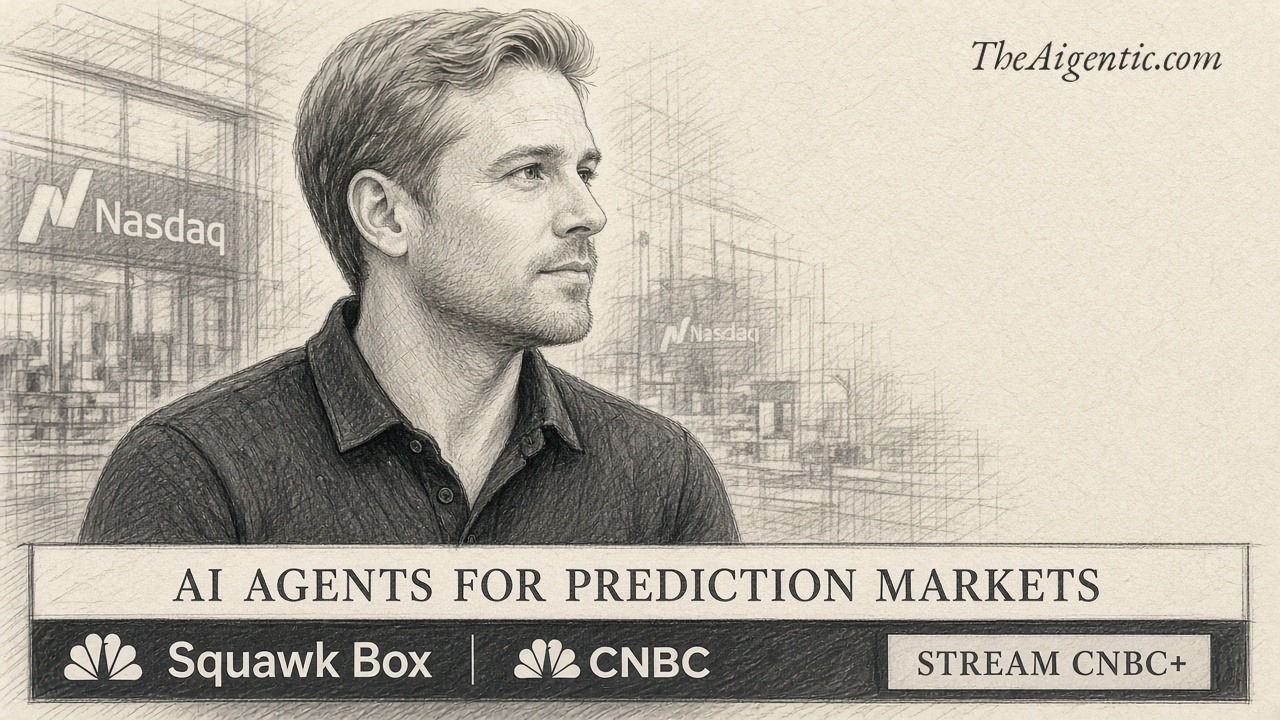
Further viewing: CNBC’s September 24 interview with Public co-CEO Leif Abraham.