Closing Time: Meta's Muse Wonder joins the frontier
TechCrunch reports Meta released Muse Wonder and Muse Wonder Full, its first frontier models for agents, with paid access through Muse and the Meta Model API.
Meta says it has a frontier model now — and it wants subscribers to pay for it. The company’s Superintelligence Lab released Muse Wonder and Muse Wonder Full on Monday, its first attempt at models it puts in the same league as OpenAI’s GPT-6 Astra and Anthropic’s Fable 5.1, TechCrunch reports. Wonder is available through the Meta Model API and Muse Code; Wonder Full stays behind Muse Code’s paid plans. Axios says Meta AI chief Alexandr Wang called them “true frontier models,” especially for personal and professional agent work.
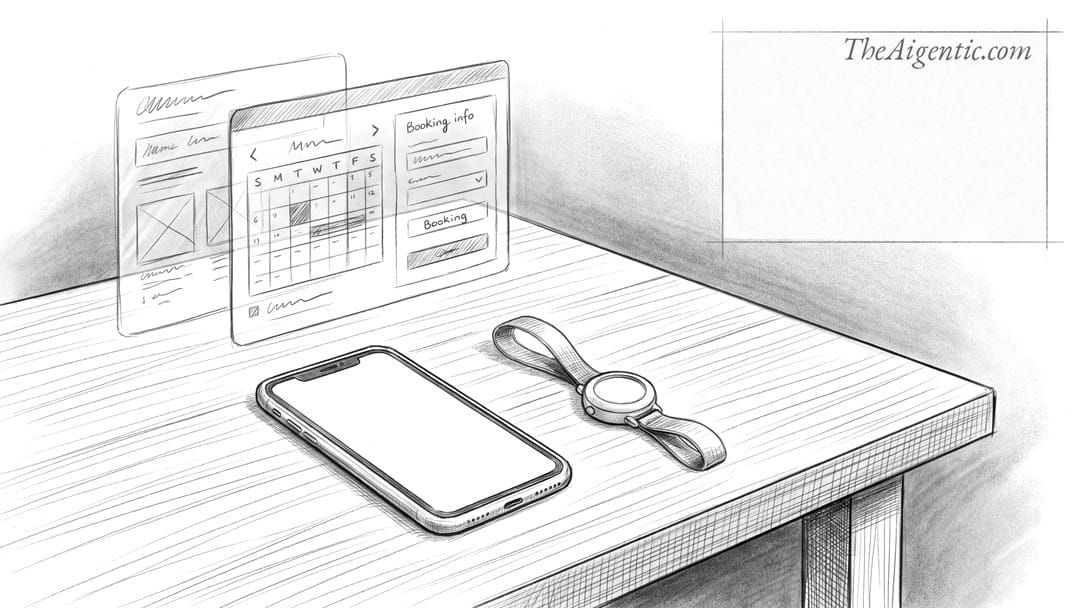
The product pitch is agents that remember and keep going. Meta is emphasizing Active Memory — carrying what matters about a user across days and weeks — and Active Focus, so an agent tries other approaches instead of stalling when a booking or claim hits a roadblock. CNBC reports Muse Wonder will power the Muse personal agent first for paid subscribers at $20 or $100 a month, with Wonder Full reserved for Muse Code plans at $50 or $200. Through the API, Wonder is priced at $4 per million input tokens and $20 per million output tokens, roughly in line with GPT-6 Sol or Opus 5.5, according to TechCrunch.
Meta’s stock rose on the news as investors weighed whether the company can turn its AI rebuild into revenue beyond ads. The models were trained at Meta’s Prometheus data center in Ohio, and the company says it has strengthened safeguards against cyber misuse — with the strongest protections tied to the paid tiers for now.
Elsewhere in AI today:
CNBC reports Microsoft unveiled Maia 300, its third-generation custom AI accelerator, and said Maia will become its primary architecture for running inference. Production starts in 2027, with multi-gigawatt deployments planned. Microsoft expects 96 Maia 300 chips per rack — double Maia 200 — delivering up to 7× the token throughput per rack and 40% more tokens per megawatt than leading GPUs. The chips stay inside Microsoft’s fleet for Copilot, GitHub and Foundry workloads rather than being rented by the hour.
BBC reports Microsoft president Brad Smith said AI faces fewer safety rules than milk or washing machines, and called for global rules that include emergency brakes, mandatory incident reports to victims of rogue agents, and independent government evaluators signing off before frontier models ship. He argued Britain’s AI Security Institute is best placed to lead, and said White House self-regulation pledges are “necessary” but “not sufficient any longer.”
SiliconANGLE reports Nvidia opened Vera Rubin rack and compute-tray designs to the Open Compute Project at its San Jose summit, updating MGX 1.2 for liquid-cooled racks up to 250 kW. Meta is adopting Nvidia’s Spectrum-6 Ethernet switches for Vera Rubin factories, while Nvidia and Cisco proposed denser 400 Gb/s-per-lane optics. Separately, Google, Meta, Microsoft and Nvidia published an OCP grid-resilience spec asking AI compute loads to stay connected during voltage dips and restore to near-full load within two seconds.
Nvidia says the same OCP package includes open-source DSX AI Factory software for switch configuration, cluster readiness testing and rack management, plus a Vera CPU rack aimed at agent orchestration — tool calls, sandboxed code and data movement — while GPU racks handle training and inference.
Microsoft says Maia 200 is already in production for Copilot and MAI training workloads across the U.S., Europe and Australia, delivering up to 1.7× more tokens per watt than leading GPU infrastructure on built-in Teams and Copilot experiences, and that Maia 300’s inference-first design targets long-context reasoning and multi-step agents.
Reuters reports Smith’s BBC interview put him at odds with President Trump’s push for industry self-regulation so U.S. firms do not lose ground to China, while British AI minister Kanishka Narayan said the U.K. would consider regulating advanced models if voluntary pre-deployment testing proves insufficient.
Markets
Meta led AI-related stocks higher on Monday after the Muse Wonder launch, while optical and networking names sold off. Meta rose 3.4% and Microsoft 1.1%, with Shopify up 4.9% and Salesforce 2.0%. Nvidia slipped 1.3% and AMD 2.3% as investors digested Microsoft’s Maia push and Nvidia’s open Vera Rubin designs. Lumentum was the biggest decliner among the names we track, down 9.8%, followed by IonQ and Coherent.
Prices are Monday’s U.S. cash close, October 12, 2026 (vs. Friday’s close). Market data is a snapshot, not live.
Deals Desk
Two compute deals from this week worth knowing.
CoreWeave × AdaniConneX — Oct 7, 2026
Data center capacity / sole-tenant lease for Nvidia Vera Rubin systems · Taloja campus, Navi Mumbai, India
240 MW across three 80 MW buildings (option to expand by up to 240 MW more); first phase mid-2028; CoreWeave’s first India data centers
Status: Announced · Source: Business Wire
Sesterce × City of Jämsä — Oct 8, 2026
New AI data center campus on the former UPM Kaipola paper mill site · Kaipola, Jämsä, central Finland
200 MW first phase (works planned to start in 2026), rising to 600 MW in phase two; more than €10B (~$11.2B) planned investment; long-term aim of 1 GW+ AI capacity in Finland
Status: Announced · Source: Data Center Dynamics
Full tracker → https://www.theaigentic.com/deals
Watch
The AI Daily Brief — The 5 Debates Shaping AI
NLW frames the week’s biggest arguments in AI — from who owns the frontier to how agents should be governed — for readers who want the story behind the headlines.
How I AI — Meta Muse: the AI agent people actually love
Claire Vo walks through why Meta’s Muse agent took off with everyday users, and what builders can steal from an assistant people actually keep open.
Cole Medin — Is Learning to Build Software Still Worth It with AI?
Cole’s honest take on whether software skills still matter when agents write more of the code — and where humans still need to own the system.