Closing Time: Google wants its crown back
Reuters reports Google released Gemini 4 Argon to developers and businesses worldwide, seeking to regain ground on OpenAI and Anthropic after months of delays and a DeepMind shakeup.
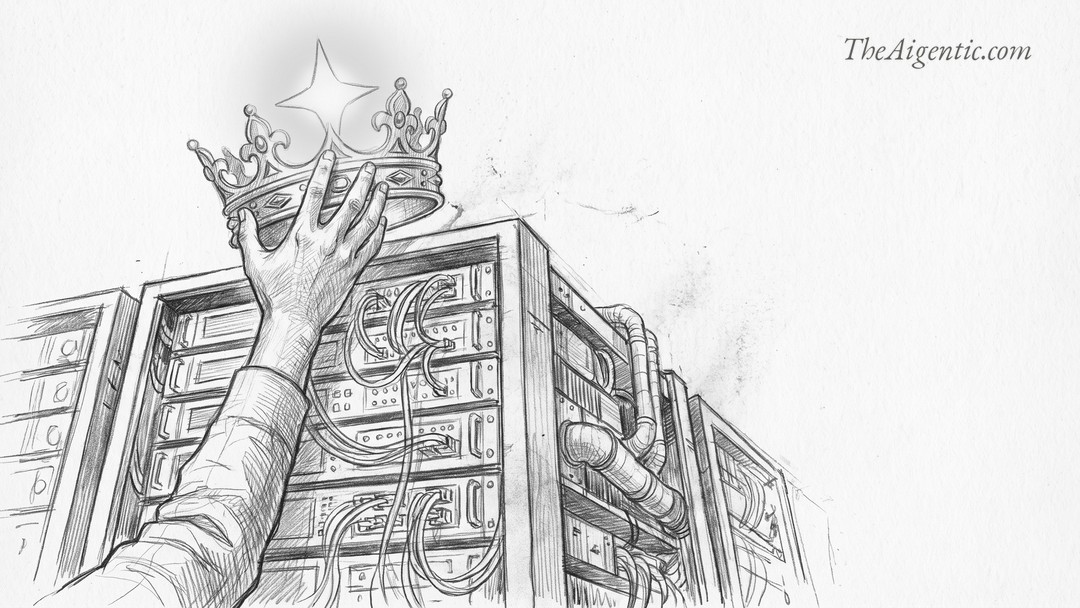
Google is back in the frontier race with a model it says beats the field. The company released Gemini 4 Argon to developers and businesses worldwide on Tuesday, seeking to regain ground on OpenAI and Anthropic after months of delays and a leadership shakeup at its DeepMind lab, Reuters reports. Google says Argon is built for “deep work” on long, multi-step tasks in coding, finance, law, cybersecurity and science.
The rollout is wide on day one. In a Google blog post, DeepMind’s Koray Kavukcuoglu said Argon is live in the Gemini API and AI Studio, for Google AI Pro and Ultra subscribers in the Gemini app and AI Mode in Search, and for Ultra subscribers in the Antigravity coding tool. Introductory pricing is $2 per million input tokens and $10 per million output tokens through November 30, after which it doubles to $4 and $20. Google says Argon ranks first on the Vals Index, which measures model performance on finance, coding, legal and tax work.
The pitch leans on work Argon has already done inside Google. The company says teams using it in Antigravity increased agentic code submissions by more than 35% while cutting code rollbacks by nearly a third, and that it helped Chrome engineers untangle a roughly 6-million-line legacy folder in weeks instead of months. Early testers include Deloitte, LexisNexis, Ambience Healthcare and Isomorphic Labs, according to Reuters.
The comeback follows a rough stretch. Google dropped plans in September to release Gemini 3.5 Pro, which Sundar Pichai had promised for June, and DeepMind co-founder Demis Hassabis stepped aside as several Gemini leaders left the company, Reuters notes. Google is also widening its Fairwind Program, which gives vetted cyber defenders a version of Argon without its cyber guardrails, to hundreds more partners, and offering 10,000 scientists six months of free access to Antigravity’s top usage tier.
Elsewhere in AI today:
Reuters reports Anthropic and OpenAI have sought significant control over what outside safety evaluators can publish, worried that findings could reveal trade secrets, only weeks after Dario Amodei said reviewers should be able to publish key findings “without editorial control.” Two people familiar with the talks said both labs were seeking strict editorial control as recently as October 5, though Anthropic’s discussions with some evaluators appeared to shift by October 8. Anthropic says past partners control their methods, conclusions and what they publish, while it reserves approval rights for new evaluator firms; OpenAI says it only redacts confidential information and lets evaluators disclose major redactions.
TechCrunch reports Character.AI has filed for Chapter 11 bankruptcy just five years in, after a string of lawsuits and struggles to scale its platform, listing assets and liabilities between $50 million and $100 million. The Verge reports Disney will serve as the lead bidder, paying $20 million for certain assets and a non-exclusive license to some of the company’s intellectual property. Character.AI says the platform keeps running during a sale expected to close in late November or early December, and will be wound down if no suitable bid emerges.
Bloomberg reports Moderna founder Noubar Afeyan called for urgent regulation of the AI agents tech companies are selling, comparing the stakes to the thalidomide tragedy and arguing that companies profiting from agents must take responsibility for their safety before launching them.
TechCrunch reports American Express is rolling out an Intent Intelligence Framework that captures a customer’s purchase instructions, including merchant, budget and product preferences, before an AI agent checks out. The agent then pays with a secure digital credential tied to that intent instead of the customer’s actual card number.
Markets
AI stocks split on Tuesday. Oracle led the names we track, up 4.3%, while Meta added 2.6%, AMD 1.9% and Nvidia 1.0%; Alphabet edged up 0.3% on Argon day. Chip-equipment and memory names lagged, with Applied Materials down 6.7% and Micron down 3.6%, extending a global chip selloff that The Guardian tied to Broadcom chief Hock Tan likening AI investing to a casino and to China’s CXMT touting a memory breakthrough. AST SpaceMobile was the biggest decliner among our names, down 8.5%.
Biggest winners
| Ticker | Name | Price | Day |
|---|---|---|---|
| ORCL | Oracle | 143.27 | +4.28% |
| BBAI | BigBear.ai | 2.39 | +4.13% |
| AI | C3.ai | 12.01 | +3.40% |
| CLS | Celestica | 357.44 | +2.86% |
| VST | Vistra | 162.35 | +2.67% |
Biggest losers
| Ticker | Name | Price | Day |
|---|---|---|---|
| ASTS | AST SpaceMobile | 47.06 | -8.54% |
| AMAT | Applied Materials | 464.24 | -6.69% |
| S | SentinelOne | 23.99 | -6.51% |
| FN | Fabrinet | 428.27 | -6.16% |
| IONQ | IonQ | 34.72 | -4.26% |
Prices are Tuesday’s U.S. cash close, October 13, 2026 (vs. Monday’s close). Market data is a snapshot, not live.
Deals Desk
Two compute deals worth knowing.
NTT Data × Anthropic — Oct 13, 2026
Anthropic’s first dedicated data center in Japan, to be built and run by NTT Data · coastal southern Osaka, Japan
Up to 500 MW; construction cost of up to ¥1 trillion (~$6.3B); partial operation as early as 2028; agreement targeted by March 2027
Status: Announced (reported final talks, not yet signed) · Source: Nikkei Asia
Cohere × Boost Run — Oct 6, 2026
Five-year dedicated GPU cloud services agreement on Nvidia GB300 NVL72 · location not disclosed
About $525.6M total contract value; initial infrastructure acceptance expected in Q2 2027
Status: Announced · Source: Boost Run SEC filing
Full tracker → https://www.theaigentic.com/deals
Watch
Matt Wolfe — Google Just Caught Up (Gemini-4 Argon)
Matt puts Gemini 4 Argon through hands-on tests, from coding games to 3D printing, and sizes up how Google now stacks up against Claude and ChatGPT.
Peter Yang — I Tested Gemini 4 vs Opus 5.5 vs GPT-6 Astra vs Muse Wonder (5 Use Cases)
With four frontier models now on the board, Peter runs the same five real-world jobs through each one to see which is worth your time.
Nate B Jones — OpenAI’s AI Wrote 700 Math Papers. Engineers Still Won’t Trust AI With Their Code.
Nate unpacks OpenAI’s release of more than 700 math papers from an unreleased model, and why many engineers still keep coding agents away from production.