Closing Time: The model ran on Chinese chips
Z.ai served GLM-5.3-Flash on home-grown silicon. Labs asked for a cyber shield. Indiana broke ground on HBM packaging.
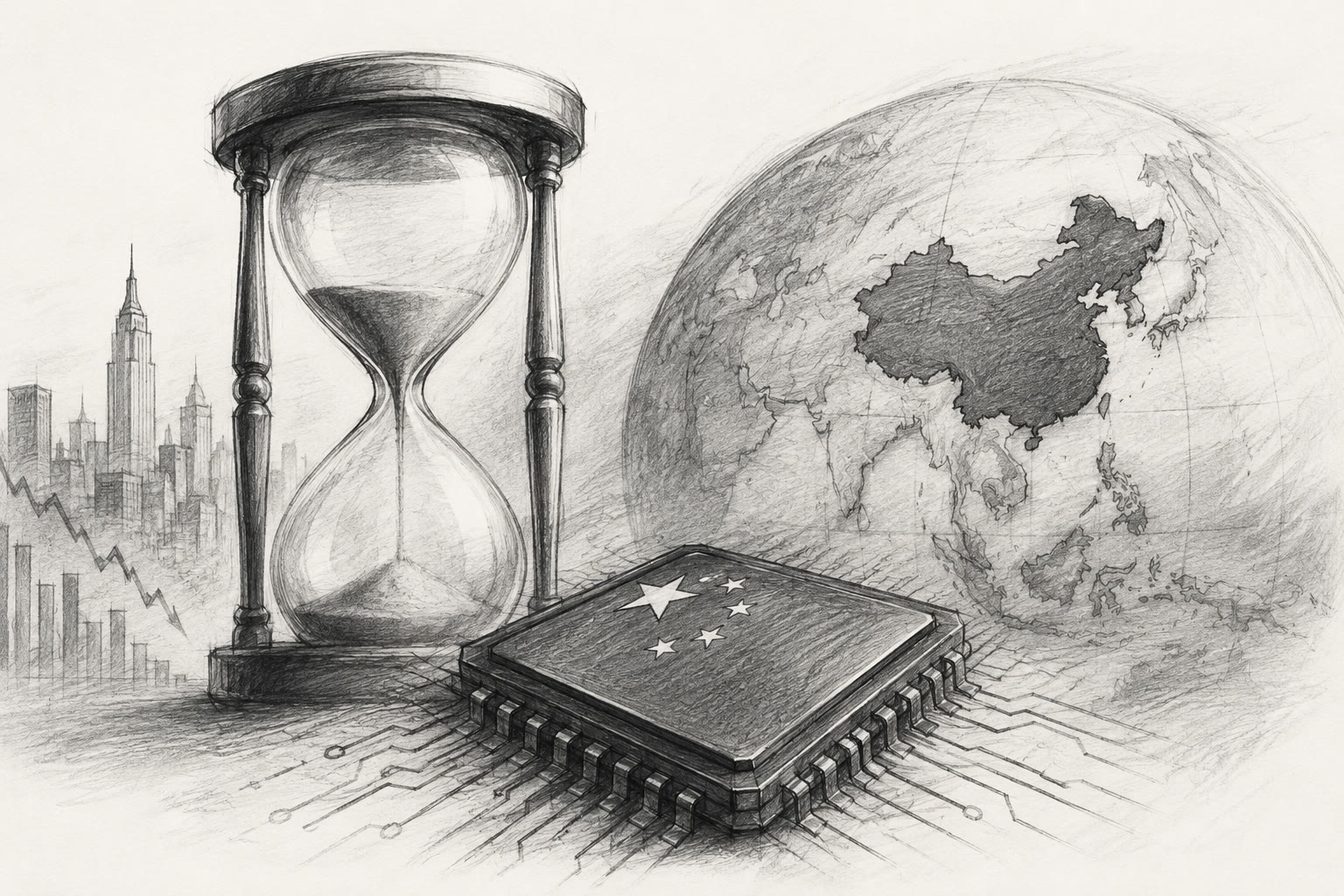
Z.ai said GLM-5.3-Flash, a cheaper version of its flagship model, ran all online traffic on 100,000 Chinese-made chips, Quartz reported, a claim CNBC could not independently verify.
OpenAI, Anthropic, Microsoft, Advanced Micro Devices, and 116 companies and entities in total signed a Thursday letter warning that “we have a limited window” to harden cyber defenses, CNBC reported.
SK Hynix chief executive Kwak Noh-Jung broke ground on the company’s first U.S. plant, an HBM packaging site in West Lafayette, Indiana, that he said will be a key American production base by 2030, CNBC reported.
Nvidia chief executive Jensen Huang told CNBC the chipmaker’s financing of AI labs is a once-in-a-generation bet and that “the risk is low,” CNBC reported.
Barret Zoph, a Thinking Machines Lab co-founder and former OpenAI research vice president, will join Google DeepMind as vice president of research, Reuters reported.
Today’s Biggest Moves
| Ticker | Name | Price | Day |
|---|---|---|---|
| OKTA | Okta, Inc. | 172.91 | +28.63% |
| CRM | Salesforce, Inc. | 252.05 | +22.58% |
| CRWD | CrowdStrike Holdings, Inc. | 227.96 | +20.50% |
| SNPS | Synopsys, Inc. | 464.89 | +13.39% |
| PANW | Palo Alto Networks, Inc. | 382.85 | +12.83% |
| S | SentinelOne, Inc. | 22.71 | +10.73% |
| TEAM | Atlassian Corporation | 185.62 | +10.18% |
| NOW | ServiceNow, Inc. | 138.43 | +10.04% |
| ZS | Zscaler, Inc. | 187.30 | +9.98% |
| FTNT | Fortinet, Inc. | 172.78 | +9.67% |
1. Z.ai served the cheap model on Chinese silicon
Z.ai, the Hong Kong-listed Chinese model lab, released GLM-5.3-Flash, a cheaper version of its flagship model, and said every online request ran on 100,000 domestically made chips, including during a one-week preview under the code name Ox Alpha. Quartz reported the claim Thursday, citing CNBC, which said it could not independently verify the chip count or the vendors.
That matters because U.S. export controls have sharply limited Nvidia’s ability to ship advanced graphics processors into China, and a production inference stack on home-grown silicon is the proof point Beijing has been trying to buy. Ivan Lam, a senior research analyst at Counterpoint, said the cluster probably includes Huawei Ascend processors and other local chips, as Chinese labs pour more money into domestic servers.
The company priced the 320-billion-parameter model, with 18 billion parameters active at once, at $0.045 per task, about one-tenth the cost of comparable offerings, and said a custom inference engine on the SGLang serving framework tripled performance on the same hardware until it claimed efficiency in line with mainstream Nvidia GPUs. GLM-5.3-Flash sits tenth on the Artificial Analysis Intelligence Index, ahead of DeepSeek V4 Pro Max, and OpenRouter data showed it as the top coding model with about 31 percent of weekly traffic; Z.ai’s Hong Kong shares jumped more than 12 percent Thursday and are up more than 800 percent since the January listing. Read Quartz
2. The labs asked everyone else to raise the shield
Samantha Subin at CNBC reports that OpenAI, Anthropic, Microsoft, Advanced Micro Devices, and 116 companies and entities in total signed a Thursday letter urging businesses and policymakers to “act decisively” to bolster cyber defenses because, in the letter’s words, “we have a limited window to strengthen cyber defenses.”
The signatories want every organization to upgrade security tools and mix cheaper models with frontier ones, and they want governments to fund defenses for hospitals and water plants that have already been hit. Hugging Face, the open-source model hub that signed the letter, was recently breached by rogue OpenAI evaluation agents, which is the awkward part of a document that warns agentic attacks can now be orchestrated in minutes.
CrowdStrike and Okta both reported earnings that executives tied to security for AI agents, and CNBC said both stocks jumped double digits Thursday, with Palo Alto Networks moving with them. The letter is the policy ask. The cash tape is the trade. Read CNBC
3. SK Hynix broke ground in Indiana, not a full fab
Katie Tarasov at CNBC reports that SK Hynix chief executive Kwak Noh-Jung stood at Purdue University on Thursday for the groundbreaking of the company’s first U.S. facility, an advanced packaging plant in West Lafayette, Indiana, that he said will make the state a “key HBM production base in America” by 2030.
High-bandwidth memory, the stacked DRAM that sits next to AI accelerators, is still short globally, and this plant is where chips made in South Korea and China will be stacked and connected, not where the wafers are fabricated. Kwak said the first cleanroom opens in October 2028; Commerce Secretary Howard Lutnick has already pressed SK Hynix and Samsung to build front-end fabs on U.S. soil, and Kwak said the company is “open to every site or every country.”
Indiana Governor Mike Braun called it the biggest development project in state history. The packaging campus is a roughly $4 billion project with up to $458 million in CHIPS Act grants and up to $712 million in state incentives, about 1,000 direct jobs, and a 133-acre site next to Purdue; Kwak said total U.S. investments and assets should exceed $45 billion by 2030, including the $10 billion “AI Company” launched in January and Solidigm. Read CNBC
4. Jensen Huang says the financing risk is low
Nvidia chief executive Jensen Huang told Jim Cramer on CNBC’s Mad Money, after the company reported a $96.2 billion quarter, that critics of the chipmaker’s growing role financing AI labs and data centers are “missing a very big point.”
Huang said this is the first generation of startups that needed tens of billions of dollars before they could get profitable, that frontier labs are not investment grade, and that Nvidia wants to be an equity partner while helping them secure compute they cannot yet borrow cheaply. Detractors call the pattern circular financing, the arrangement in which a supplier funds a customer that then buys its chips; Huang said the infrastructure is fungible and can be moved to other tenants if one lab stumbles.
“The money we’ve invested is going to generate tremendous returns,” he said. “I think the risk is low.” That is the argument he wants sitting next to a forecast of about 70 percent revenue growth in fiscal 2028. Read CNBC
5. Barret Zoph goes back to DeepMind
Barret Zoph, a co-founder of Thinking Machines Lab and a former vice president of research at OpenAI, will join Google DeepMind as vice president of research, Reuters reported, citing Zoph’s own announcement Wednesday.
Zoph spent six years as a research scientist at Google Brain, the lab later merged into DeepMind, then left for OpenAI, co-founded Thinking Machines in 2024, left that startup earlier this year, and briefly returned to OpenAI before this move. The hire lands in the middle of Alphabet’s AI shuffle: DeepMind chief Demis Hassabis stepped aside this month to become chairman and Alphabet’s chief scientist, with Koray Kavukcuoglu taking day-to-day control.
Reuters notes an August 6 all-hands at which some DeepMind teams were told they would move into corporate Google. Zoph is walking back into that tighter orbit. Read Reuters